water-treatment
What is Industrial Water Treatment?
- TOP
- What is Industrial Water Treatment?
- What Is Industrial Water Treatment?
- What Industrial Water Treatment Equipment Can Do
- How Industrial Water Treatment Equipment Is Used | Roles by Industry
- Lineup of Industrial Water Treatment Equipment
- Key Points When Considering the Introduction of Industrial Water Treatment Equipment
- Have Questions About Industrial Water Treatment?
Content 01Industrial Water Treatment: Adjusting Water Quality for Its Intended Use
The required water quality of the “water” used in factories and facilities differs depending on its application. Rather than using tap water or groundwater as it is, adjusting water quality to suit the intended purpose is called industrial water treatment.
What Is Industrial Water Treatment?
Industrial water treatment refers to treating raw water, such as tap water, groundwater, or industrial water, to achieve the water quality required for a specific application.
Raw water may contain iron, hardness components, turbidity, fine particles, organic matter, and other substances. When tap water is used, residual chlorine may also need to be addressed. If these are used without treatment, they may cause piping problems, equipment malfunctions, or impacts on product quality, depending on the application. For this reason, adjusting water quality with equipment suited to the intended use is an important process that supports stable facility operation.
Why Industrial Water Treatment Is Necessary
Industrial water treatment is required primarily from the following three perspectives.
- Maintaining stable water quality: Adjusting raw water quality, which can fluctuate with the season and weather, to a stable level.
- Meeting hygiene and quality standards: Supporting compliance with hygiene and quality standards required for each application.
- Reviewing running costs: Depending on usage conditions, cost reductions may be expected through groundwater utilization and equipment protection.
What Industrial Water Treatment Equipment Can Do
Industrial water treatment equipment removes unwanted components from raw water and adjusts the water quality to suit the intended application. The functions vary depending on the type of equipment.
※Scroll horizontally to view the full table.
| Treatment Item | Main Equipment | Main Role |
|---|---|---|
| Removal of sand and fine particles | Sand Separator | Removal of sand during water pumping and protection of downstream equipment |
| Removal of turbidity and suspended matter | Rapid Sand Filter | Removal of turbidity and fine particles from raw water |
| Removal of iron and manganese | Iron and Manganese Removal Filter | Prevention of red water and black water |
| Removal of residual chlorine and organic matter | Activated Carbon Filter for Dechlorination | Adsorption of chlorine and odor-causing components |
| Removal of hardness components (water softening) | Ion Exchange Water Softener | Prevention of scale adhesion |
An industrial water treatment system is configured by combining these types of equipment according to the application and raw water characteristics.
How Industrial Water Treatment Equipment Is Used | Roles by Industry
The role required of industrial water treatment equipment differs depending on the industry and application. The following are typical examples of how it is used.
Manufacturing Factories (Electronics, Chemicals, Food, Pharmaceuticals, etc.)
Industrial water treatment equipment plays a role in producing raw material water and process water that directly affect product quality. In the electronics industry, pretreatment water is required for producing pure water and ultrapure water. In food factories, production water and cleaning water must meet hygiene standards. In chemical factories, the required water quality depends on each process. Since the necessary water quality varies by industry and process, treatment is configured in stages, from pretreatment to processes for producing pure water.
Medical and Welfare Facilities
Stable 24-hour water supply and hygienic water quality are essential. Industrial water treatment equipment adjusts water quality for a wide range of applications, including hot water supply, laundry, kitchens, and boilers for sterilization.
Hotels, Commercial Facilities, Large Buildings, and Data Centers
The required water quality differs by application, such as guest room hot water supply, cooling tower makeup water for air conditioning, and kitchen use. Industrial water treatment equipment helps prevent scale in cooling towers and supports stable equipment operation.
Laundry and Dry-Cleaning Factories
Water is used as cleaning water and as boiler water for steam irons. Water treatment equipment is used to prevent reduced detergent efficiency caused by hardness components and to control scale in boilers.
Lineup of Industrial Water Treatment Equipment
We propose optimal systems by combining the following equipment according to the application and water quality.
Ion Exchange Water Softener
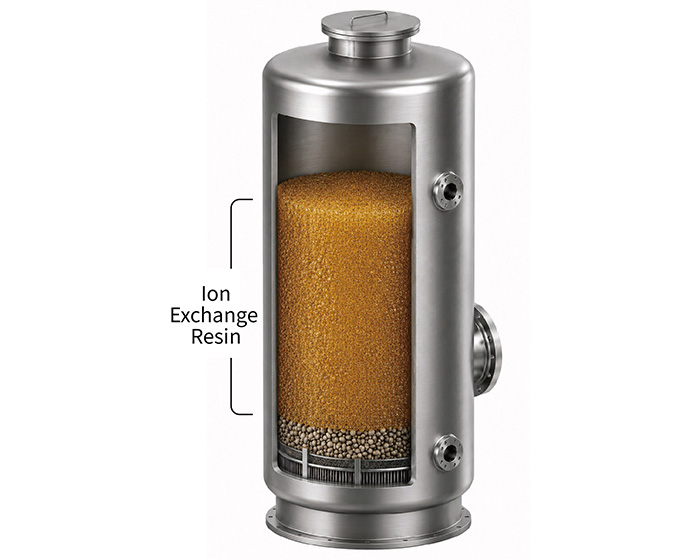
Ion Exchange Water Softener
This equipment removes hardness components such as calcium and magnesium. It helps suppress scale adhesion and contributes to maintaining the thermal efficiency of boilers and heat exchangers.
Applications: boiler feed water, cooling tower water, laundry water, dyeing water, metal parts cleaning water, food processing water, dishwashing water, humidification water
Iron and Manganese Removal Filter
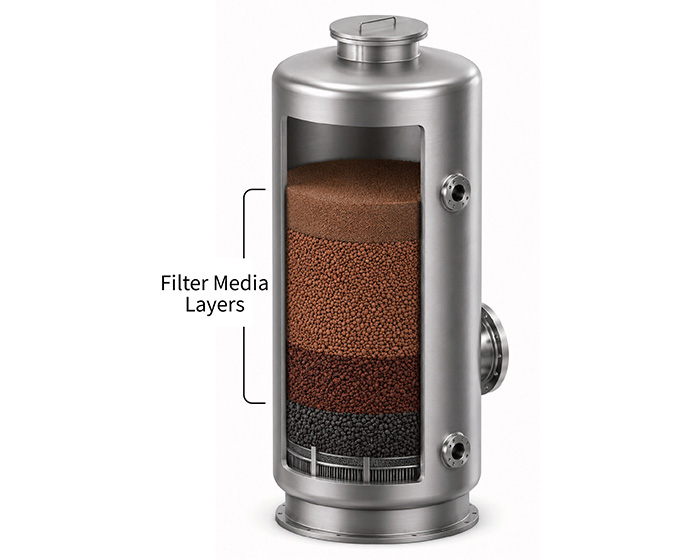
Iron and Manganese Removal Filter
This equipment removes iron and manganese from groundwater. It is used to prevent red water and black water and to reduce the load on downstream equipment.
Applications: pretreatment for advanced filtration systems, beverages, food processing water, laundry water, cooling tower water, boiler feed water
Sand Separator (Hydrocyclone)
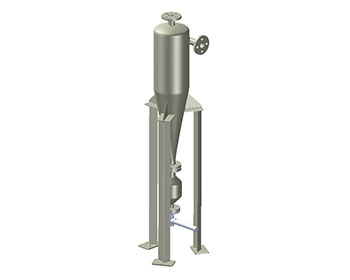
Sand Separator (Hydrocyclone)
This pretreatment equipment removes sand and fine particles contained in groundwater. It is used to prevent wear and clogging of downstream equipment and piping, and as pretreatment for membrane processes.
Applications: desanding of groundwater, river water, and industrial water; removal of sand from well water; pretreatment of cooling water and boiler feed water; membrane treatment (RO/UF) and pump protection
Activated Carbon Filter for Dechlorination
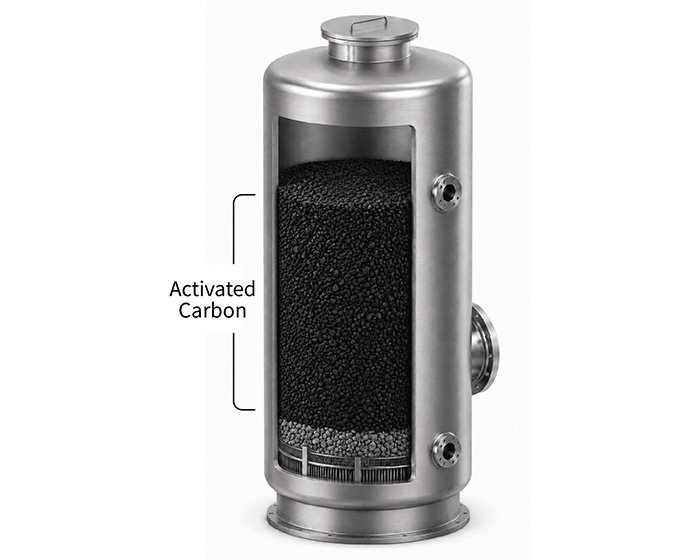
Activated Carbon Filter for Dechlorination
This equipment adsorbs and reduces residual chlorine in tap water and organic matter in raw water using activated carbon. When installed upstream of RO membranes or water softeners, it can help reduce the load on downstream equipment.
Applications: pretreatment for RO, UF, and NF membranes (prevention of membrane deterioration caused by chlorine), boiler feed water pretreatment, water for food, beverages, pharmaceuticals, and cosmetics, aquaculture and aquarium water (protection of organisms), industrial process water
Rapid Sand Filter
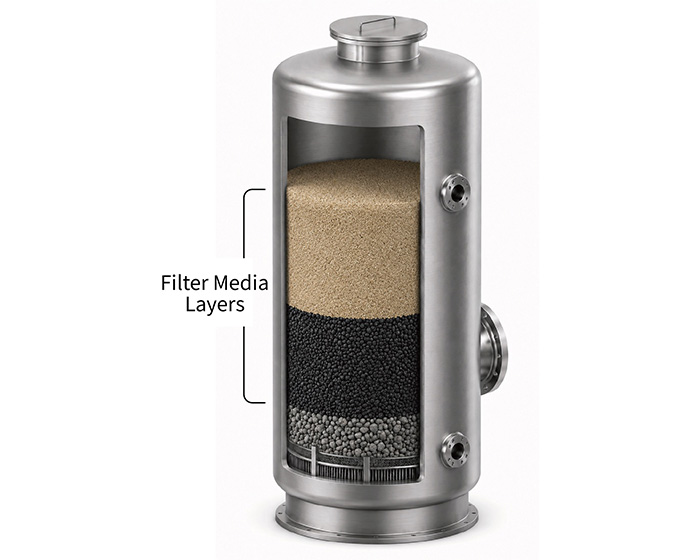
Rapid Sand Filter
This equipment removes turbidity and fine particles from raw water using multiple layers of filter media. As a core pretreatment process, it is used in groundwater utilization systems and membrane treatment systems.
Applications: municipal water treatment (water treatment plant), industrial water treatment, cooling water treatment, and pretreatment before membrane treatment
Key Points When Considering the Introduction of Industrial Water Treatment Equipment
When considering industrial water treatment equipment, organizing the requirements from the following perspectives makes it easier to identify the necessary equipment configuration.
- Type and quality of raw water: The required treatment varies depending on whether the raw water is tap water, groundwater, industrial water, or another source.
- Application and required water quality: Water quality requirements should be organized by application, such as cleaning, manufacturing, hot water supply, and boiler feed water.
- Water usage and operating conditions: Equipment capacity should be considered based on daily volume, peak flow rate, and operating hours.
- Connection to existing equipment: The design will vary depending on whether the system is newly installed or added to an existing process flow.
We will first review your current water quality and equipment conditions before considering the appropriate equipment configuration, so please feel free to contact us.
Have Questions About Industrial Water Treatment?
Whether you are collecting information or evaluating solutions, our specialists are here to help.
Feel free to contact us for advice, equipment selection or a quotation.