useful
Sludge Dewatering and Fermentation System
- TOP
- Insights
- Sludge Dewatering and Fermentation System
- What’s Sludge Fertilization? A Novel Solution for Sustainable Resource Utilization
2025.03.18Sludge Dewatering and Fermentation System
What’s Sludge Fertilization? A Novel Solution for Sustainable Resource Utilization
Sludge – classified as industrial waste – must be adequately treated in accordance with Japanese law. In Japan, approximately 154.12 million tons of sludge were generated during the fiscal year of 2023, accounting for 42% of all industrial waste. However, with appropriate treatment and reuse, sludge can become a valuable resource that contributes to the sustainable reuse of resources.
In recent years, amid rising prices of chemical fertilizers, technologies that convert sewage sludge into fertilizer have garnered significant attention. In April 2023, Japan’s Ministry of Land, Infrastructure, Transport and Tourism announced a policy to promote the use of sewage sludge as fertilizer, prompting local governments and companies to accelerate their initiatives.
Reusing sludge that would otherwise be disposed of as waste not only reduces waste volume but also helps to minimize environmental impacts by decreasing the use of chemical fertilizers, thereby protecting soil and water quality.
This article explores the benefits, technologies, and practical applications of sludge fertilization in detail.
What Is Sludge Fertilizer?
Sludge fertilizer is an organic fertilizer produced by appropriately treating sludge generated at wastewater treatment plants and community wastewater treatment facilities. Rather than disposing of sludge as waste, converting it into fertilizer enables the effective reuse of valuable resources and plays an important role in building a circular economy.
Producing sludge fertilizer involves several processing steps. First, the sludge undergoes dewatering to reduce its moisture content. It is then sanitized through high-temperature drying or other treatment methods to eliminate pathogens. After that, the sludge is fermented to stabilize and mature the material, preventing harmful gas generation or adverse effects when applied to soil. Finally, it is processed to an appropriate particle size and prepared for use as fertilizer.
The main nutrients in sludge fertilizer are nitrogen, phosphorus, potassium, and organic matter. These essential components support healthy plant growth and can provide benefits comparable to—or even greater than—those of chemical fertilizers.
Main Components of Sludge Fertilizer and Their Functions
| Component | Benefits for Plants |
| Nitrogen | Promotes leaf growth and supports protein synthesis. |
| Phosphorus | Encourages root development and promotes flowering and fruit production. |
| Potassium | Improves resistance to diseases and pests while enhancing crop quality. |
| Organic Matter | Stimulates microbial activity and improves soil fertility. |
Another key advantage of sludge fertilizer is its environmental sustainability. By recycling waste into a valuable resource instead of disposing of it, sludge fertilizer helps reduce CO₂ emissions associated with incineration while contributing to more sustainable resource management.
Benefits of Using Sludge as Converted Fertilizer
Reusing sludge as fertilizer offers the following advantages:
(1) A More Economical Substitute for Chemical Fertilizers
Due to geopolitical issues such as the conflict in Ukraine and stricter inspections on Chinese fertilizer exports, the price of chemical fertilizers has soared, posing a significant burden on the agricultural sector. Fertilizers derived from sludge are more affordable and offer a stable supply, making them a cost-effective alternative.
(2) Reduction of Environmental Impact
Recycling sludge that would otherwise be treated as industrial waste helps reduce the amount of waste requiring disposal. Another significant benefit is that replacing a portion of chemical fertilizers with sludge fertilizer can help minimize the environmental impact on soil and water quality.
Converting sludge into fertilizer also plays an important role in advancing a circular economy. Traditionally, sludge has been disposed of through incineration or landfill. By recycling it as a valuable resource, the burden on landfill sites can be reduced. In addition, sludge fertilization generates significantly lower CO₂ emissions than incineration, making it an effective approach to mitigating climate change.
The production of chemical fertilizers—particularly nitrogen fertilizers—requires high-temperature and high-pressure processes that consume large amounts of energy. In contrast, sludge fertilizer is produced from waste-derived resources, offering the potential to reduce the environmental impact associated with fertilizer production. Furthermore, nitrous oxide (N₂O), a potent greenhouse gas, is emitted during both the production of nitrogen fertilizers and their reactions in soil. Reducing the use of chemical fertilizers can therefore also help lower greenhouse gas emissions.
In other words, converting sludge into fertilizer supports both sustainable agriculture and environmental protection by promoting the efficient use of resources.
(3) Soil Improvement Effects
Organic fertilizers derived from sludge are rich in organic matter and trace elements, enhancing soil moisture retention and improving aggregate structure. This contributes to long-term soil health.
Contact Us About Sludge-to-Fertilizer Solutions
Potential Disadvantages and Risks of Sludge Fertilizer
While converting sludge into fertilizer offers many benefits, inadequate management can lead to serious problems. Understanding these potential risks is essential to ensure its safe and responsible use.
(1) Risk of Heavy Metal and Hazardous Substance Contamination
Wastewater entering sewage treatment systems may contain pollutants from industrial and domestic sources. As a result, heavy metals can accumulate in sewage sludge.
Common examples include:
| Heavy Metal | Major Sources |
| Lead | Aging pipes, paints, and automotive emissions |
| Cadmium | Electroplating, batteries, and pesticides |
| Mercury | Medical equipment and fluorescent lamps |
| Hexavalent Chromium | Electroplating and leather manufacturing |
If these heavy metals accumulate in soil, they may be absorbed by plants and could pose long-term risks to human health through the food chain.
(2) Risks Associated with Pathogenic Microorganisms
Sludge may contain pathogenic bacteria, viruses, and parasite eggs. Without proper sanitization, such as high-temperature drying or composting, the following risks may arise:
- Infection of workers handling the sludge
- Foodborne illness caused by contamination of agricultural products
- Deterioration of the soil environment
(3) Environmental Dispersion and Secondary Pollution
Substances contained in sludge fertilizer may spread through wind dispersion or leaching, potentially affecting the surrounding environment.
| Affected Area | Potential Impact |
| Groundwater | Water contamination caused by heavy metals, nitrate nitrogen, and other substances |
| Rivers and Lakes | Eutrophication resulting from nitrogen and phosphorus runoff |
| Soil Ecosystems | Changes in the balance of soil microbial communities |
(4) Long-Term Risks from Improper Use
Excessive or prolonged application of sludge fertilizer may result in problems such as:
- Accumulation of heavy metals in soil
- Excessive inputs of nitrogen and phosphorus, leading to water pollution
However, in Japan, sludge fertilizers are regulated under the Fertilizer Control Act, which establishes quality and safety standards. Only products that meet strict requirements for heavy metal concentrations and sanitary conditions are permitted for distribution. In addition, local governments and relevant organizations provide guidelines on appropriate application rates, helping ensure the safe and effective use of sludge fertilizer when applied properly.
Technologies for Sludge Fertilization
Proper treatment is essential prior to reusing sludge as fertilizer. Below are key technologies supporting this process:
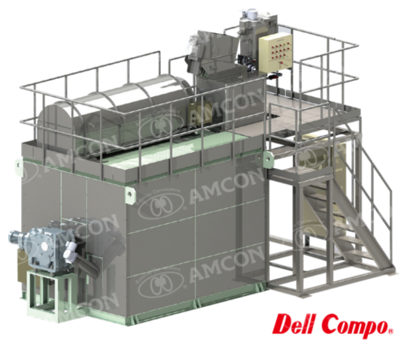
(1) Sludge Dewatering and Fermentation System “Dell Compo”
The Dell Compo system performs sludge dewatering, drying, and fermentation in a single process. The fermented sludge it produces can be used as fertilizer.
*Note: In order to use fermented sludge as fertilizer, you must first register said sludge as fertilizer.
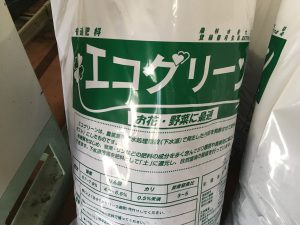
“Eco Green,” a fertilizer made from sludge fermented using Dell Compo.
Process Flow
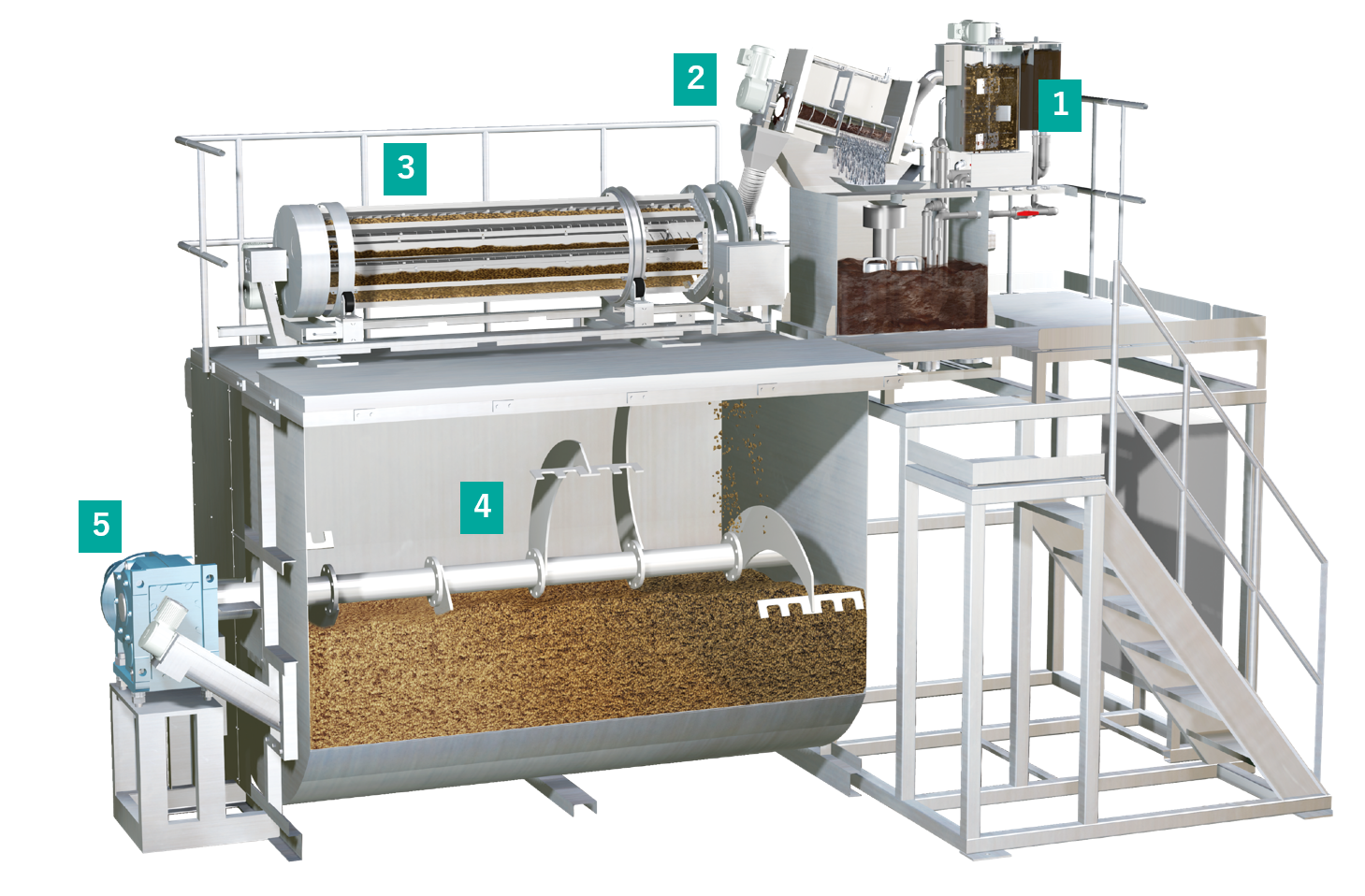
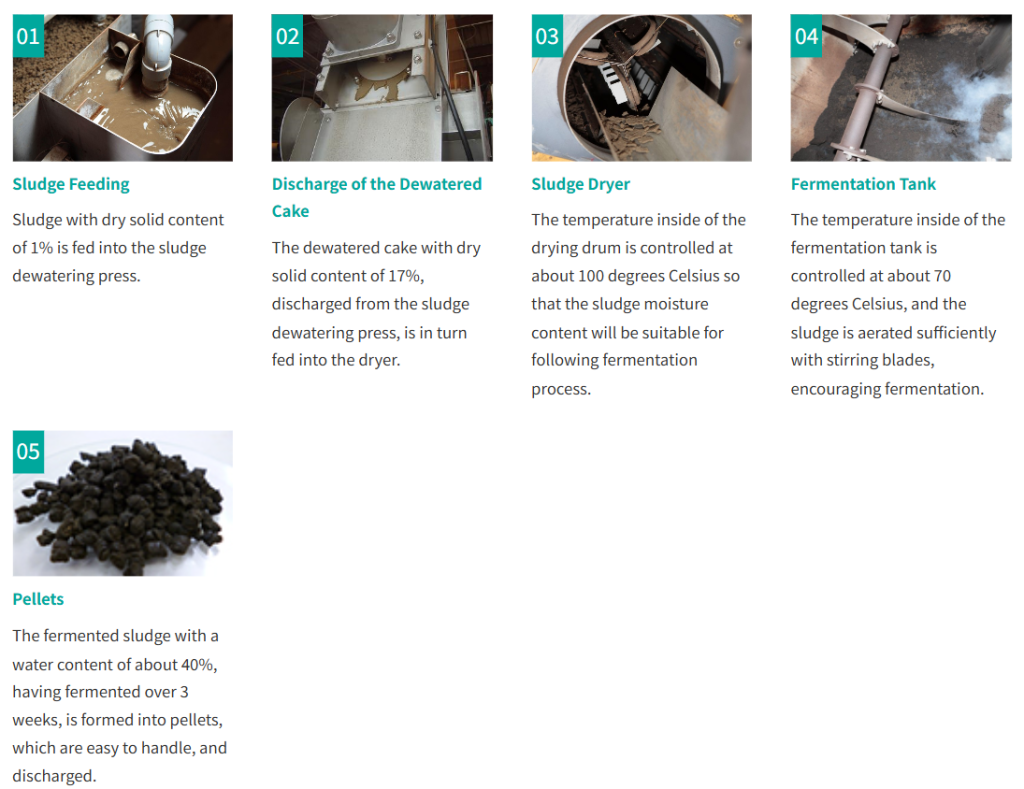
Features:
- All equipment is modular, allowing for space-saving installation
- No need for additives such as sawdust or rice straw—fermentation is possible with sludge alone
- In use since 1996, mainly in agricultural wastewater treatment facilities
Learn More About the Dell Compo Sludge Dewatering and Fermentation System
(2) Sludge Dryers: “K Series” & “SP Series”
Did you know that sludge can be used as fertilizer without fermentation?
Sludge generated via activated sludge treatment in the food processing industry can be transformed into fertilizer simply through drying. Known as microbial biomass fertilizer, it is categorized differently from conventional sewage sludge-based fertilizers, eliminating safety concerns or negative impressions.
In addition to the food industry, sludge from pulp, fermentation, or gelatin production (excluding those using leather waste) can also be used for fertilizer production.
K Series Sludge Dryer (Steam-Powered Drum Type)
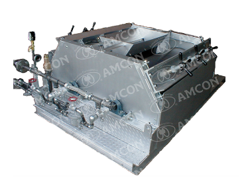
Using steam as its heat source, the dryer is fed sludge between two rotating drums where it adheres to the drums’ surface to dry in a thin film.
Advantages:
- Simple structure for easy maintenance
- No need for large-scale equipment such as storage hoppers, large drying tanks, or motors
- Compact size suitable for small facilities
More about the K Series, click here
SP Series Sludge Dryer (Electric Rotary Kiln Type)
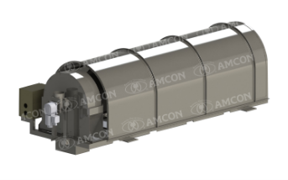
This compact dryer features a proprietary dual-drum structure.
Advantages:
- Dried sludge is discharged continuously in flake form, reducing dust and simplifying handling
- Small and easy to install
- No need for large-scale equipment such as storage hoppers, large drying tanks, or motors
More about the SP Series, click here
When combined with our VOLUTE™ Dewatering Press, the dewatered sludge cake can be fed directly into either the K Series or SP Series dryer, enabling continuous drying and discharge.
Cost Reduction for Physico-Chemically Treated Sludge
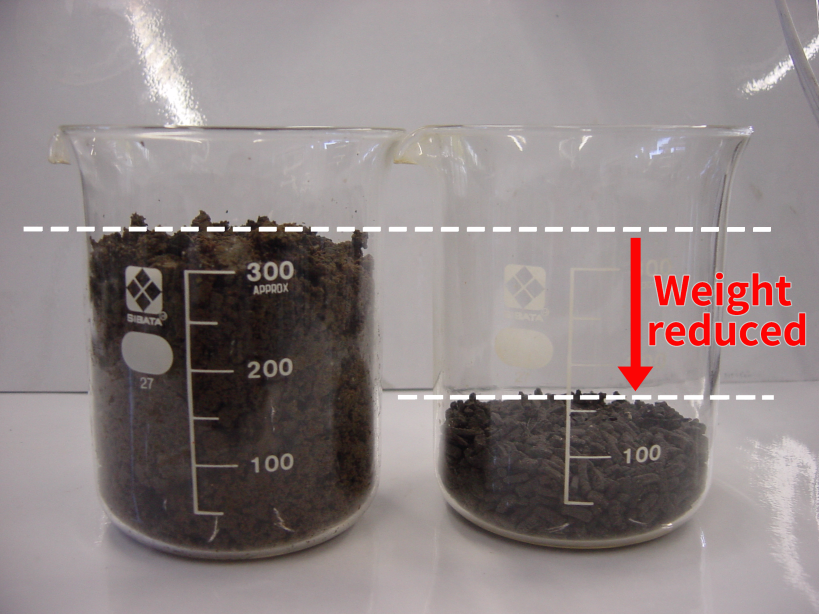
Some types of sludge are generated through physicochemical treatment processes, such as the Chemical Precipitation Process. Although this type of sludge cannot be converted into fertilizer, reducing its moisture content to 40% or less through a drying process can significantly lower industrial waste disposal costs.
For example, assume that a facility generates 800 wet tons of Sludge Cake per year (equivalent to 120 dry tons (DS)) and pays an industrial waste disposal fee of JPY 20,000 per wet ton. By reducing the sludge moisture content from 85% to 40%, the facility can reduce its annual industrial waste disposal costs by approximately JPY 12 million.
Conclusion: Understanding the Benefits and Challenges of Sludge Fertilization
Although sludge fertilization has certain challenges, it also offers significant benefits, including waste reduction, lower agricultural costs, and reduced environmental impact. With the recent rise in chemical fertilizer prices, converting sludge into fertilizer has the potential to become a key solution for promoting sustainable agriculture.
If you are interested in the Dell Compo Sludge Dewatering and Fermentation System or the K Series and SP Series Sludge Dryers, please feel free to contact us for more information.
Related Information
Introduced product/Service
Have Questions About Sludge Dewatering?
Whether you are collecting information or evaluating solutions, our specialists are here to help. Feel free to contact us for advice, equipment selection or a quotation.