sludge-treatment
What is Sludge Treatment?
- TOP
- What is Sludge Treatment?
- What Is Sludge?
- What Sludge Treatment Equipment, Such as Sludge Dewatering Presses and Sludge Thickeners, Can Do
- Benefits of Installing Sludge Treatment Equipment
- Main Types of Sludge Dewatering Presses
- Role of Flocculants and Coagulants in Sludge Treatment
- Sludge Treatment Equipment Lineup
- Have Questions About Sludge Dewatering?
Content 01Sludge Treatment: The Process of Reducing Sludge Volume and Weight
When wastewater treatment is performed at factories, commercial facilities, wastewater treatment plants, and other sites, sludge is generated as a by-product. As generated sludge contains a large amount of water, it is costly to dispose of without further treatment. The process of removing water from this sludge and reducing its volume and weight is called sludge treatment.
This page providesan overview of basic knowledge about sludge treatment, what sludge dewatering presses and thickeners can do, and the main types of dewatering methods.
What Is Sludge?
To clean effluent water generated from factories and business sites, impurities other than water (H2O) must be removed. One widely used method is biological treatment, such as the activated sludge process.
In biological treatment, microorganisms take in organic matter contained in effluent water as they multiply, separating the water into treated water and masses of microorganisms that contain contaminants (activated sludge). The solids generated through this process are called sludge. Sludge mainly consists of microorganisms, dead microorganisms, and organic matter.
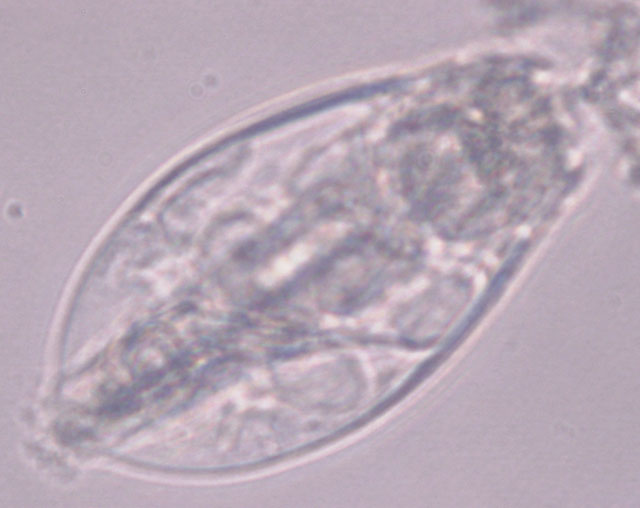
As biological treatment continues, waste activated sludge is generated as microorganisms multiply. This sludge must be properly treated as industrial waste in accordance with the law. Sludge is the largest category of industrial waste generated in Japan. Annual sludge output is approximately 158.54 million tons (FY2023 results), accounting for around 40% of all industrial waste. For this reason, efficient sludge treatment has become an important issue for many business sites.
What Sludge Treatment Equipment, Such as Sludge Dewatering Presses and Sludge Thickeners, Can Do
Waste activated sludge generated through biological treatment is often more than 98-99% water. Disposing of it as it is not only increases transportation and disposal costs, but also places a greater burden on the environment.
This is wheresludge treatment equipment such as sludge dewatering presses and sludge thickeners is used. By reducing the water contained in sludge and decreasing its bulk (volume), these machines help reduce disposal costs and environmental impact.
Role of Sludge Dewatering Presses
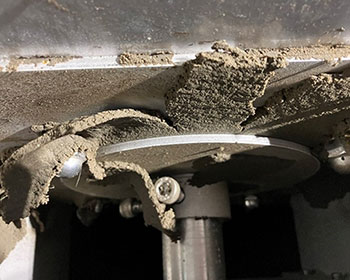
A sludge dewatering press is a machine that efficiently removes water from sludge and separates the sludge into solids and water.
In general, dewatering can reduce sludge volume to approximately 1/15 to 1/20 of its original volume, significantly reducing the costs associated with sludge storage, transportation, and disposal.
After dewatering, sludge becomes a solid material called sludge cake, making it easier to carry and store. It is also suitable for recycling and disposal processes such as incineration, composting, and use as a raw material for cement.
Role of Sludge Thickeners
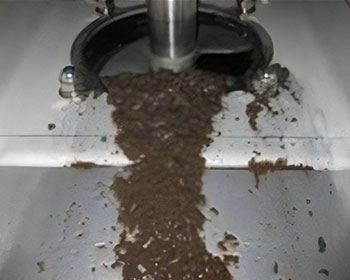
A sludge thickener is a machine that removes part of the water contained in sludge and increases the sludge concentration.
In general, installing a sludge thickener can reduce sludge volume to about 1/5 of its original volume, greatly reducing the burden associated with sludge storage, transportation, and disposal.
When installed upstream of an existing belt press dewatering machine or similar equipment, a sludge thickener can supply stable thickened sludge to the dewatering machine, helping improve processing capacity and stabilize operation.
The water separated through thickening or dewatering is returned to the wastewater treatment process and, after being treated again, is discharged into rivers, coastal waters, or other receiving waters.
Benefits of Installing Sludge Treatment Equipment
Installing sludge dewatering presses and thickeners can provide the following benefits.
- Reduction of industrial waste disposal costs: Reducing volume and weight helps lower transportation and disposal costs.
- Space-saving: Sludge can be treated compactly without requiring a large site such as a drying bed.
- Labor-saving: Work previously performed manually can be automated.
- Reduced environmental impact: Reducing industrial waste volume and suppressing CO2 emissions during transport helps lower environmental impact.
Main Types of Sludge Dewatering Presses
There are several types of sludge dewatering presses, and the most suitable type depends on the sludge property, processing capacity, and installation conditions. Representative methods are introduced below.
| Method | Features |
|---|---|
| Multi-disc screw press dewatering machine | Requires no washing water to prevent clogging and can also dewater oil-bearing sludge. It can dewater low-concentration sludge without installing thickening equipment in the preceding stage, and direct dewatering from an oxidation ditch tank is also possible. |
| Screw press dewatering machine | Can handle a relatively wide range of sludge types and has a simple structure. Cleaning and maintenance of the screen section may be required. |
| Belt press dewatering machine | Suitable for high-capacity treatment and has a long track record of operation. It uses a relatively large amount of washing water and requires periodic belt replacement. It is generally considered unsuitable for oil-bearing sludge. |
| Filter press dewatering machine | Can easily produce sludge cake with low moisture content and can also support large-scale treatment. Because it operates in batches, it is not suitable for continuous treatment. |
| Multidisc dehydrator | Uses a small amount of washing water and has many application records for oil-bearing sludge. It is generally suitable for treating organic sludge, but depending on the sludge property, it may be difficult to achieve low moisture content. Prior confirmation is required when applying it to inorganic sludge. |
| Centrifuge | Compact and easy to install. Its enclosed structure makes odor control easier. Power consumption is relatively high. |
Each method has its own strengths and limitations, so it is important to select equipment based on the sludge property, processing capacity, and installation conditions.
Multi-disc screw press dewatering machine VOLUTE DUO™
VOLUTE™
Role of Flocculants and Coagulants in Sludge Treatment
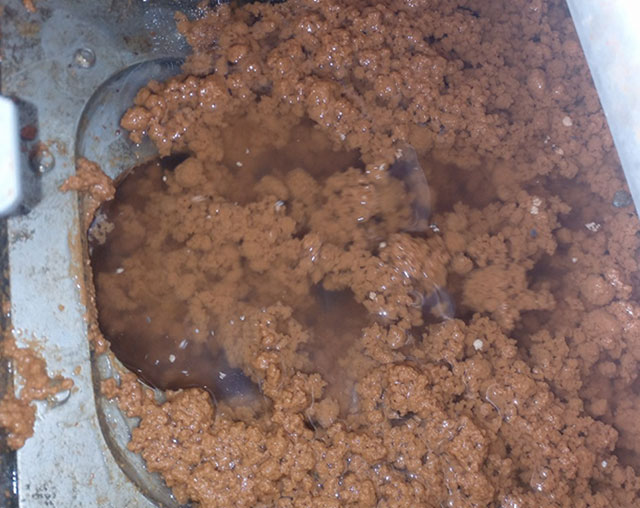
Flocculants and coagulants are essential chemicals for maximizing the performance of sludge dewatering presses. With many sludge dewatering presses, properly flocculating sludge enables stable dewatering performance and sludge cake with low moisture content.
Extremely fineparticles are dispersed in sludge, and because these particles electrically repel each other, sufficient solid-liquid separation cannot be achieved as they are. When a flocculant or coagulant is added, the fine particles bind together and form larger aggregates known as flocs. These flocs make it easier to separate water from solids, enabling efficient dewatering.
Types of Flocculants and Coagulants
Flocculants and coagulants used in sludge treatment are broadly classified into inorganic coagulants and polymer coagulants.
- Inorganic Coagulants: These chemicals neutralize fine particles in sludge and create conditions that make flocculation easier.
- Polyferric Sulfate (polyferric coagulant)
- Polyaluminum Chloride (PAC)
These are typical examples.
- Polymer Coagulants: These chemicals form large, strong flocs by bridging particles together.
- Cationic type (positive charge)
- Anionic type (negative charge)
- Amphoteric type (having both positive and negative properties)
These are selected according to the sludge property.
Selection of Flocculants and Coagulants Determines Dewatering Performance
The performance of a sludge dewatering press is greatly affected not only by the machine itself, but also by the selection and use of flocculants and coagulants. Even when the same dewatering press is used, sufficient dewatering performance may not be achieved unless the type and dosage of the flocculant or coagulant, dissolution concentration, and mixing conditions are appropriate. Conversely, selecting a flocculant or coagulant suited to the sludge and using it under appropriate conditions may help reduce the moisture content of sludge cake and lower chemical consumption. Sludge properties vary from day to day due to changes in raw water and manufacturing processes. Therefore, regularly checking the condition of flocs and reviewing the type and dosing conditions of flocculants and coagulants are important for stable sludge treatment. AMCON conducts sample tests tailored to customers’ sludge properties and proposes the most suitable flocculants, coagulants, and operating conditions. From improving dewatering performance to reducing chemical costs and industrial waste disposal costs, we support customers in improving sludge treatment from a comprehensive perspective.
Sludge Treatment Equipment Lineup
We propose the most suitable model according to sludge properties and customer challenges.
VOLUTE DUO™ / VOLUTE™ Dewatering Press
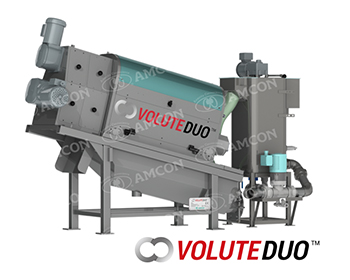
VOLUTE DUO™ / VOLUTE™ Dewatering Press
This is a multi-disc screw press dewatering machine. Its unique clog-free structure supports a wide range of sludge properties, including organic sludge, inorganic sludge, oily sludge, and highly fibrous sludge.
VOLUTE™ Thickener
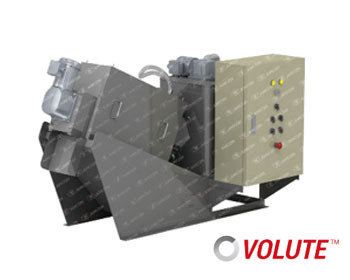
VOLUTE™ Thickener
This machine thickens sludge with a concentration of 1% or less to approximately 4-6%. At sites where vacuum truck discharge is required, thickening sludge helps reduce the amount of sludge carried out.
Sludge Dryer
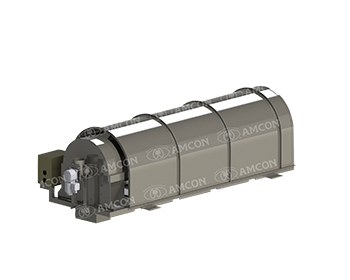
Sludge Dryer
When combined with the VOLUTE™ Dewatering Press, this machine dries sludge cake into dried sludge with a moisture content of approximately 10-40%.
Sludge Dewatering and Fermentation System Dell Compo
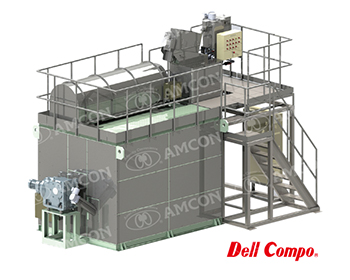
Sludge Dewatering and Fermentation System Dell Compo
This system is designed for rural community sewerage facilities serving 1,000 to 3,000 people. It converts waste activated sludge with a moisture content of about 99% into fermented sludge for discharge.
Have Questions About Sludge Dewatering?
Whether you are collecting information or evaluating solutions, our specialists are here to help. Feel free to contact us for advice, equipment selection or a quotation.