wastewater-treatment
What is Wastewater Treatment?
- TOP
- What is Wastewater Treatment?
Content 01Wastewater Treatment: Meeting Effluent Standards Before Discharge
Wastewater discharged from factories, facilities, and households cannot be released into the natural environment as it is. “Wastewater treatment” refers to the process of treating wastewater to meet specified standards under laws and regulations such as the Water Pollution Prevention Act before it is discharged.
What Is Wastewater Treatment?
Wastewater treatment is the process of improving the quality of effluent water generated by factories, various facilities, and households so that it can be discharged into receiving waters or public sewerage systems.
Industrial effluent may contain organic matter, suspended solids, oil, chemical substances, heavy metals, and other components, while domestic sewage may contain food residue, detergents, human excreta, and other substances. Discharging such wastewater without treatment can lead to water pollution in rivers and seas, adverse effects on ecosystems, impacts on the surrounding living environment, and, in some cases, violations of laws and regulations such as the Water Pollution Prevention Act. For this reason, treating wastewater according to its properties and discharge destination, and improving its quality to meet effluent standards, is an important process that supports environmental conservation and stable operations.
Wastewater Treatment Process
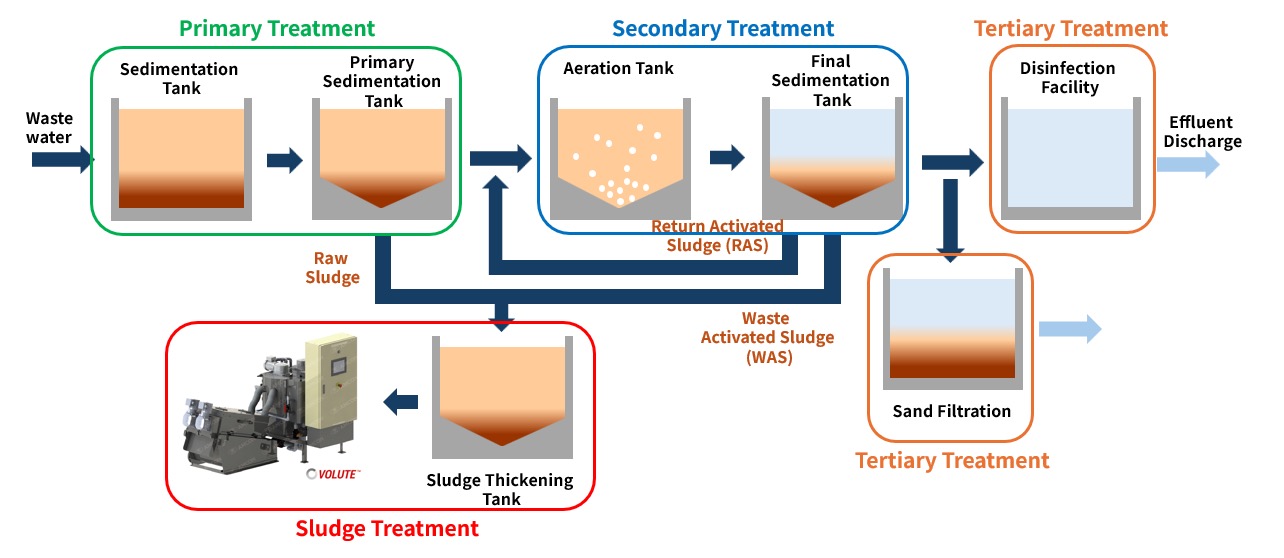
Wastewater is purified through a series of step-by-step treatment processes. In general, wastewater treatment consists of three stages: primary treatment, secondary treatment, and tertiary treatment. Sludge generated in each process is treated separately in the sludge treatment process.
Primary Treatment | Removal of Large Solids, Oils, and Grease
Primary treatment is a process that physically removes relatively large solids, oils, and grease contained in wastewater. Typical methods include screening, which separates large foreign matter using mesh-like equipment; grit chambers, which slow the flow rate to settle and separate sand and grit; and oil-water separation, which recovers oil that floats due to differences in specific gravity. The main purpose of primary treatment is to reduce the load on treatment equipment in subsequent processes.
Secondary Treatment | Decomposition of Organic Matter through Biological Treatment
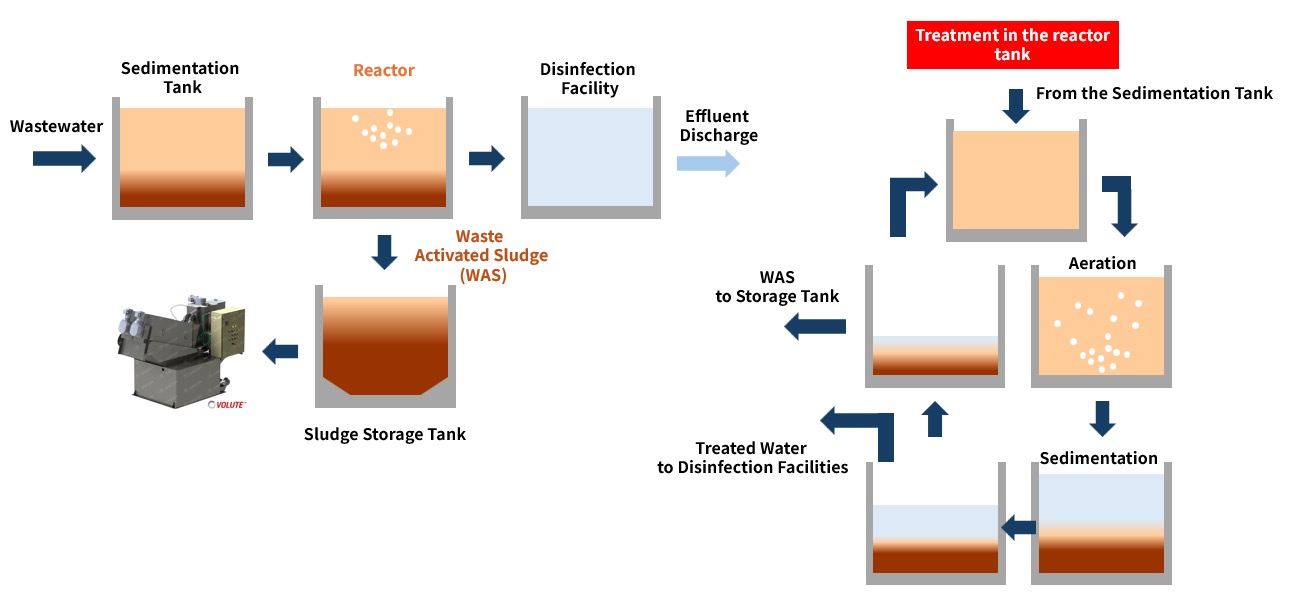
Secondary treatment uses the action of microorganisms to decompose and remove dissolved organic matter and fine suspended solids in wastewater. A typical method is the activated sludge process, in which aerobic microorganisms are activated in an aeration tank and consume and decompose pollutants as nutrients. During the biological treatment process, dead microorganisms and flocs formed through microbial growth are generated as waste activated sludge.
Tertiary Treatment | Final Polishing through Advanced Wastewater Treatment
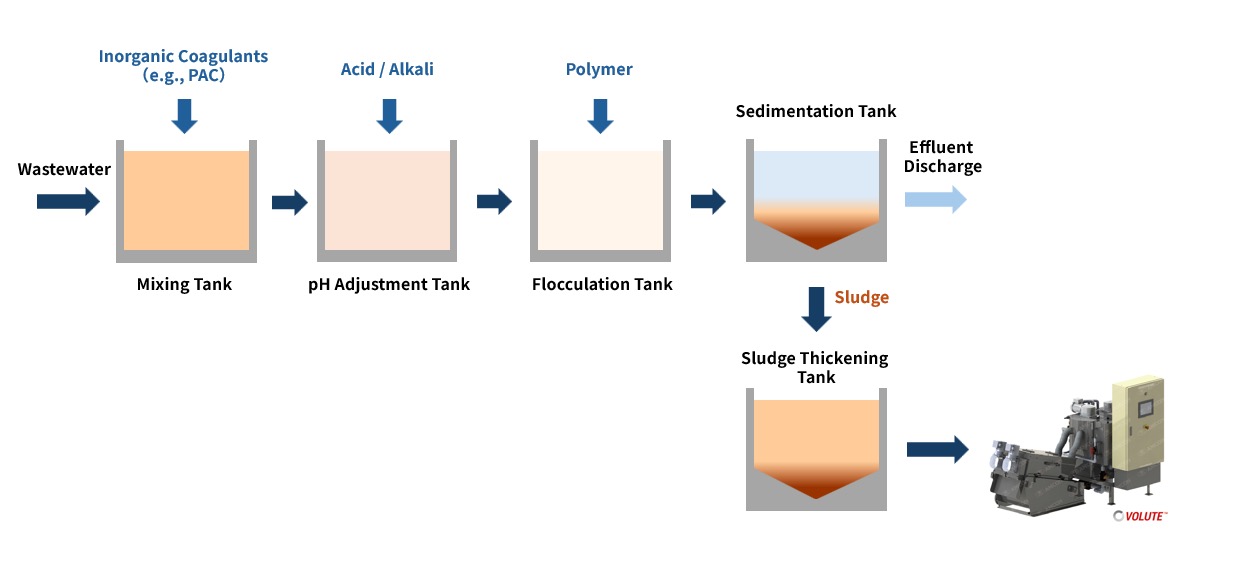
Tertiary treatment removes fine suspended solids, dissolved substances, color, odor, and other components that could not be sufficiently removed by secondary treatment. Depending on the water quality standards of the discharge destination and the intended reuse application, methods such as chemical precipitation, which forms flocs using coagulants and separates them by sedimentation; sand filtration, which physically separates residual suspended solids; activated carbon adsorption, which adsorbs odor, pigments, and harmful substances; and disinfection, which kills or renders pathogenic microorganisms harmless, are combined as needed.
Sludge Treatment Process
This process reduces the volume of sludge generated in each wastewater treatment process through thickening and dewatering, followed by disposal or resource recovery. Working in coordination with the water treatment system that purifies wastewater, it plays an important role in supporting the overall wastewater treatment system.
Click here for more information on sludge treatment.
Waste activated sludge generated particularly in secondary treatment (biological treatment) generally contains more than 99% water. Therefore, efficiently reducing sludge volume is an important challenge for reducing disposal costs and environmental impact.
A sludge dewatering press is equipment that separates water from sludge to greatly reduce its volume and weight. It plays an important role in determining the operating cost of wastewater treatment equipment and serves as a core component of the sludge treatment process.
AMCON INC. proposes sludge volume reduction using the VOLUTE DUO™/VOLUTE™ Dewatering Presses.
Click here for details on the VOLUTE DUO™/VOLUTE™ Dewatering Presses.
Wastewater Treatment Methods
Wastewater treatment methods are broadly classified into “biological treatment” and “physicochemical treatment.” These methods are combined according to the properties of the wastewater and the standards of the discharge destination.
Biological treatment
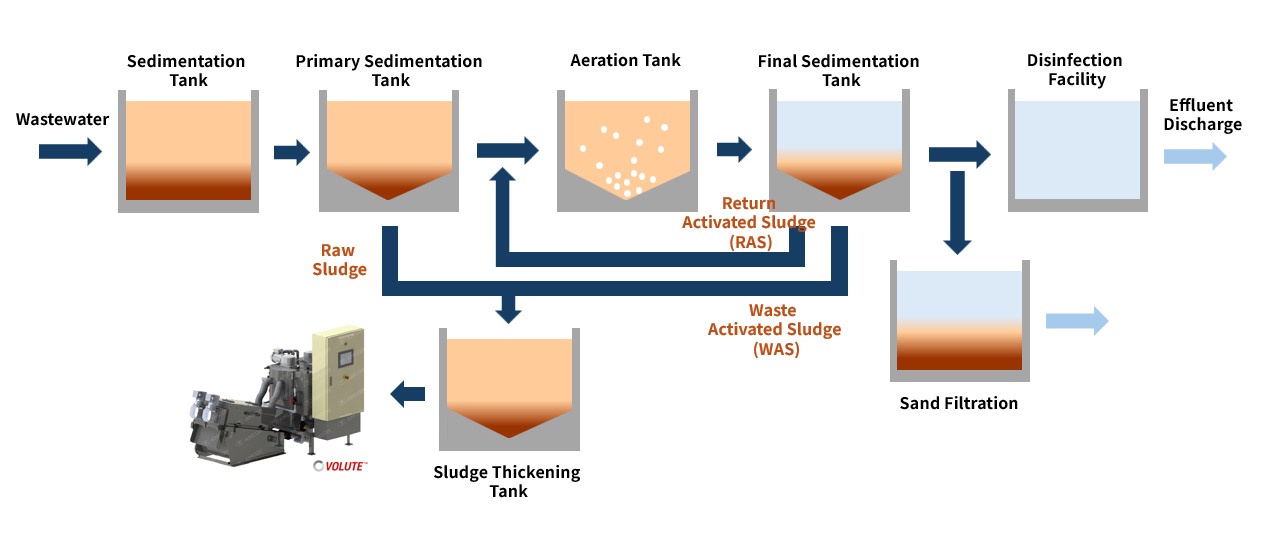
- Conventional Activated Sludge Process
A typical treatment method in which aerobic microorganisms decompose organic matter in an aeration tank
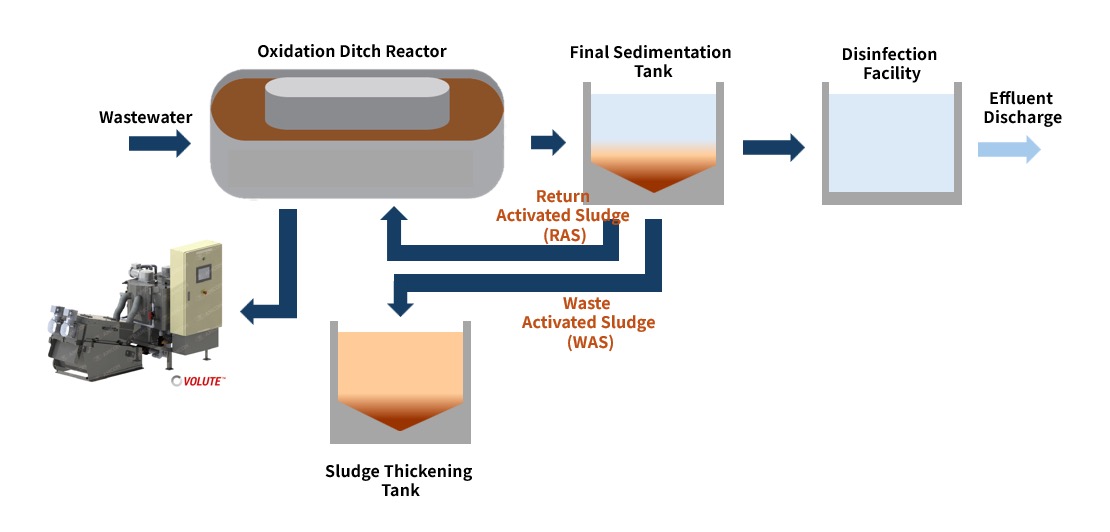
- Oxidation Ditch Process
A treatment method for small to medium-sized facilities that decomposes organic matter through extended aeration
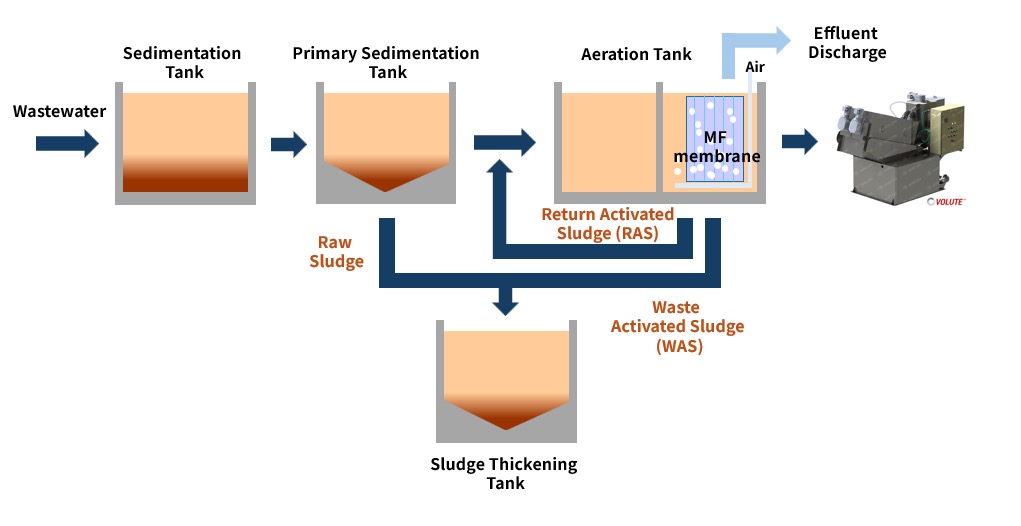
- Membrane Bio Reactor Process (MBR)
A treatment method that combines activated sludge treatment with membrane separation to perform solid-liquid separation
- Sequencing Batch Reactor (SBR)
A treatment method in which aeration, sedimentation, and discharge are switched by time sequence in a single tank
- Anaerobic Fermentation
A treatment method that decomposes organic matter using anaerobic microorganisms and recovers methane gas
Physicochemical treatment
- Chemical Precipitation Process
A treatment method in which fine contaminants are formed into flocs using coagulants, then settled and separated
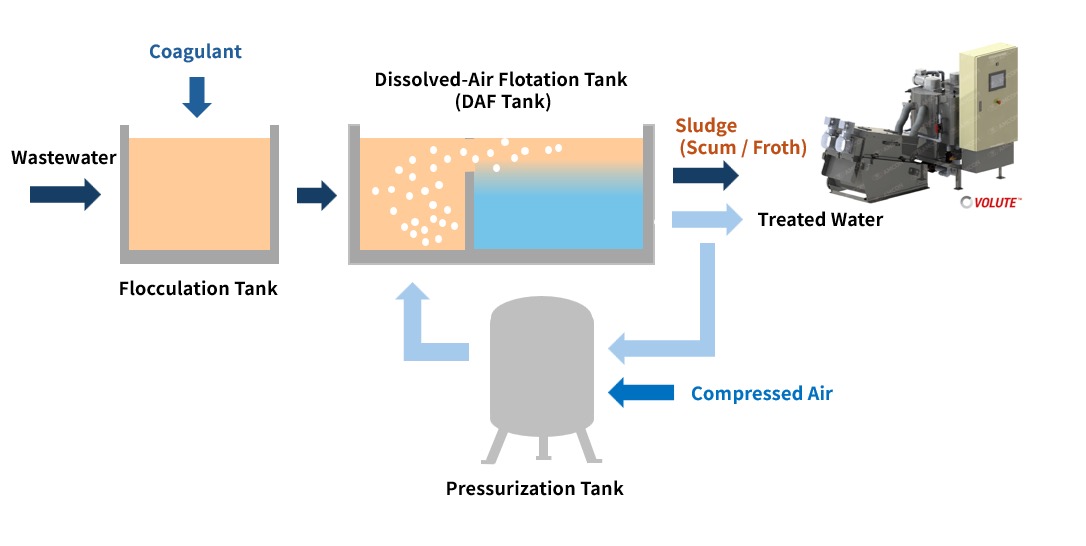
- Dissolved Air Flotation Method
A treatment method in which fine air bubbles attach to suspended solids in wastewater, causing them to float for separation
How Wastewater Treatment Is Used | Roles by Industry
The required wastewater treatment differs depending on the industry and the properties of the wastewater. The following are typical applications.
Food, Livestock, and Meat Processing Industries
These industries generate wastewater containing high concentrations of organic matter and animal or vegetable oils. Biological treatment for decomposing organic matter is generally the core process, and in some cases, chemical precipitation or adsorption treatment is combined in later stages.
Chemical, Materials, and Machinery Industries
These industries generate wastewater containing a wide range of components, such as acids, alkalis, persistent substances, and heavy metals. Treatment systems are configured by combining neutralization, chemical precipitation, adsorption treatment, and other methods according to the wastewater components.
Wastewater Treatment Plants
Wastewater treatment plants are required to stably treat large volumes of wastewater, mainly domestic sewage and miscellaneous wastewater. Operations are centered on biological treatment and include odor control and stabilization of treated water quality.
Wastewater Treatment Solutions Offered by AMCON
AMCON INC. provides the following solutions for challenges faced at wastewater treatment sites.
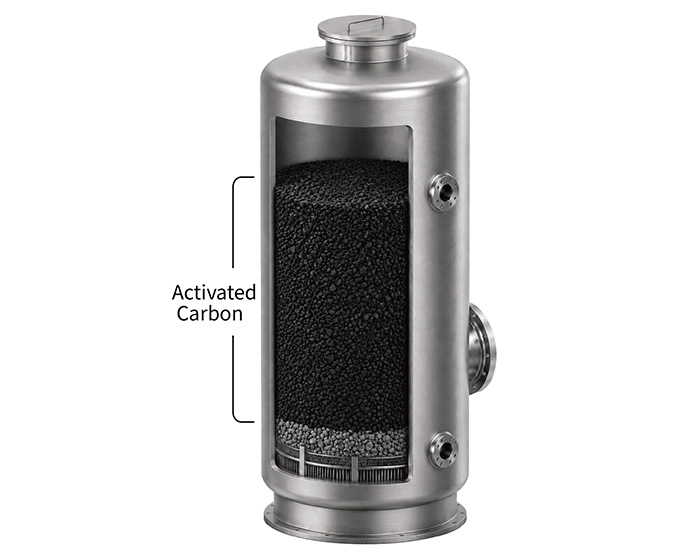
Activated Carbon System for COD Removal
Activated Carbon System for COD Removal
This system removes persistent organic matter and color components contained in wastewater through the adsorption properties of activated carbon. Installed after biological treatment, it reduces COD components that are difficult to decompose through biological treatment and helps improve effluent water quality. It is used in applications requiring more advanced wastewater treatment, such as chemical and pharmaceutical plants and leachate treatment at final disposal sites.
Wastewater Analysis Service
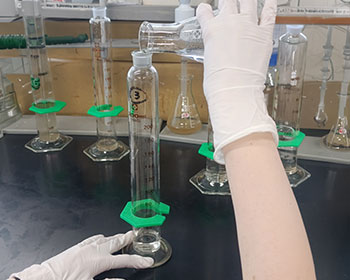
Wastewater Analysis Service
AMCON INC. performs analyses of various water quality parameters, including COD, BOD, and SS, at its in-house laboratory. The service can be used for a wide range of purposes, from water quality checks required for selecting equipment and chemicals to water quality monitoring during operation.
You will be redirected to “WaterQualityAnalysis.com,” a website specializing in water quality testing.
Have Questions About Wastewater Treatment?
Whether you are collecting information or evaluating solutions, our specialists are here to help.
Feel free to contact us for advice, wastewater analysis, equipment selection or a quotation.