product
Sludge Dewatering Press
- TOP
- Browse by Product
- Sludge Dewatering Press
- VOLUTE™ Dewatering Press MS Series
For sewage treatment plants with an oxidation ditch process
Japan Sewage Works Agency standard specifications
VOLUTE™ Dewatering Press MS Series
Treat the sludge taken from an oxidation ditch by the oxidation ditch process. In 1998, we demonstrated the direct dewatering from oxidation ditch for the first time in the world as a result of the joint research of Japan Sewage Works Agency and AMCON.


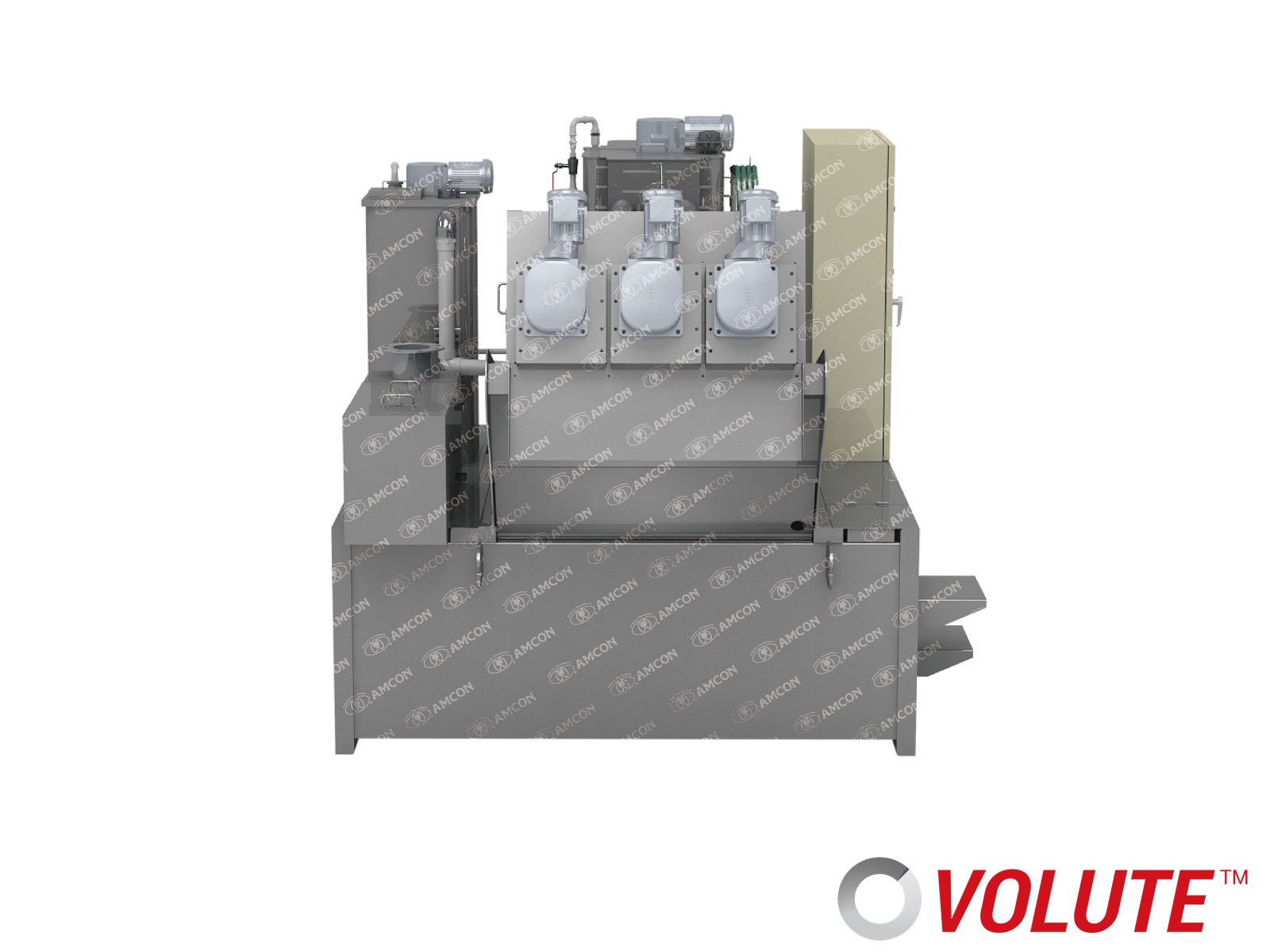
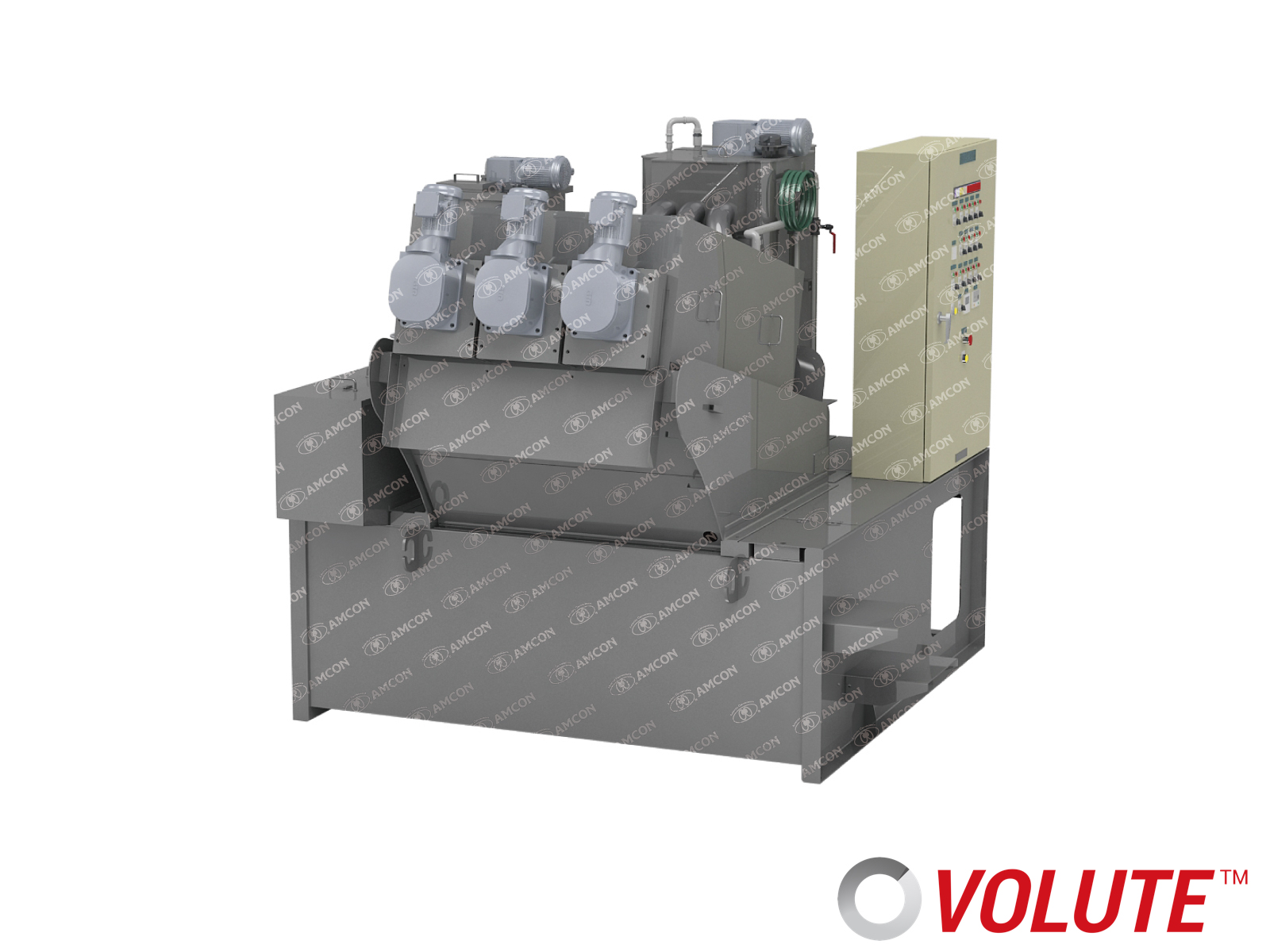
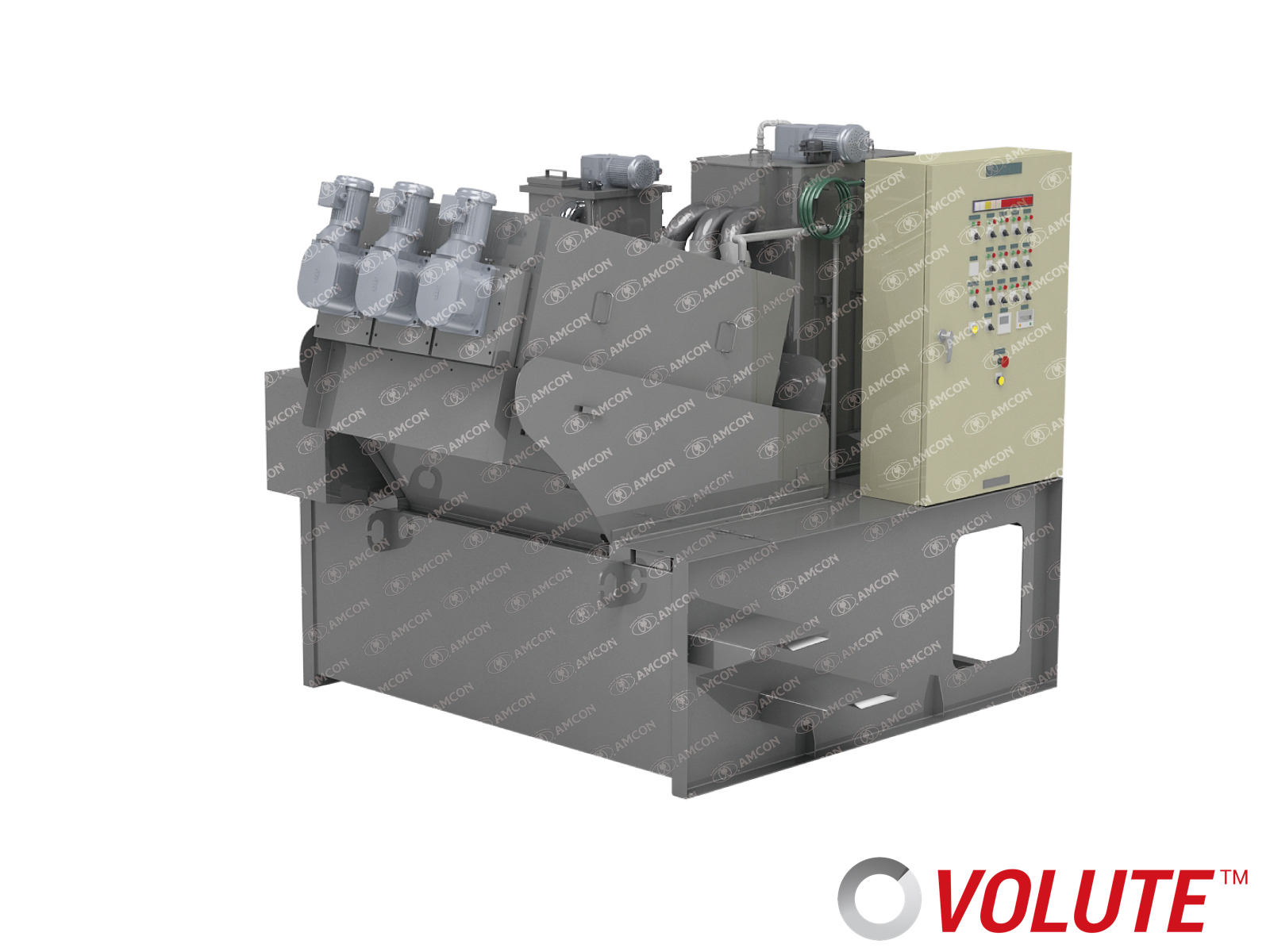
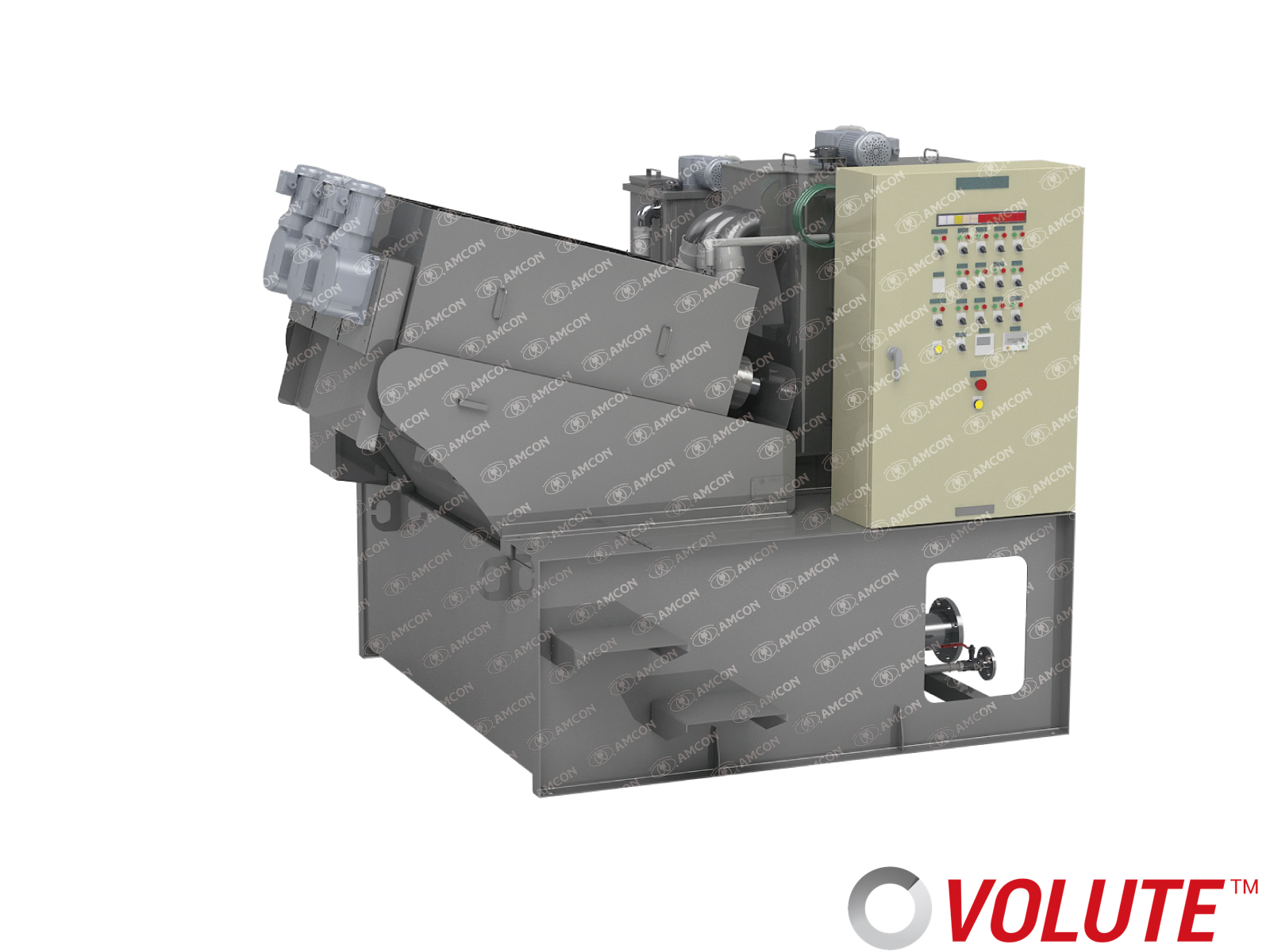
Advantages
-
 Clog-free self-cleaning mechanism
 -
 No pre-thickening required (TS 0.2%〜)
 -
 Low Noise/Low Vibration
 -
 Easy Operation & Maintenance
 -
 Small footprint
 -
 Excellent expandability.
Additional cylinder unit can be added even after delivery
No Pre-thickening Required
This machine has an integrated structure in which two processes, thickening and dewatering, are handled by a single filter element, allowing the user to directly charge low-concentration sludge having a TS of about 0.2% without providing a thickening system in the preceding stage.
Revolution in Sludge Treatment VOLUTE™ Introduced
– Direct Dewatering from Oxidation Ditch –
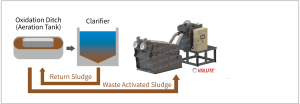
Since low-concentration sludge can be directly charged into the system, the oxidation ditch (aeration tank) direct dewatering process with VOLUTE™ has been widely employed in Japan as a sludge treatment method suitable for small-scale sewage treatment plants.
The direct dewatering from oxidation ditch was demonstrated for the first time ever in the world as a result of the joint research of Japan Sewage Works Agency and AMCON in 1998.
Advantages of the Direct Dewatering from Oxidation Ditch:
- Reduction in the construction and operating costs for thickening and storage equipment
- Odor reduction by dewatering fresh aerobic sludge
- Efficient recovery of phosphorus in waste activated sludge to the dewatered cake side, thereby reducing the load due to phosphorus returning to wastewater treatment
- Easy operation and management of the sludge dewatering press due to small concentration fluctuations in the oxidation ditch (aeration tank)
Commonly Used Sludge Treatment
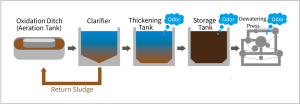
Oxidation Ditch Direct Dewatering
No Clogging Even with Oily Sludge
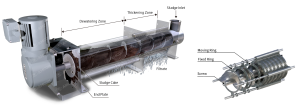
The machine has a filter element that consists of alternating layers of rings fixed at four locations (fixed rings) and vertically movable rings (moving rings) maintaining a gap between them, and a single screw that is threaded through the filter element to transfer and compact the sludge.
A clog-free self-cleaning mechanism is achieved since the screw rotates at a constant speed in contact with the floating ring, driving the floating ring to clean the filter element gap.
The machine delivers stable dewatering performance even with oily sludge.
The amount of cleaning water for preventing clogging is very small compared to other types of dewatering machines.
Easy Operation & Maintenance
24-hour fully automatic unmanned operation is possible with an automatic operation control using various sensors. There is no need for manual startups or shutdowns whilst operating the machine.
Additionally, there aren’t many daily maintenance items, and on top of that, there are no complicated operations required.
Furthermore, it does not require any special knowledge or skills, making it an easy-to-use product.
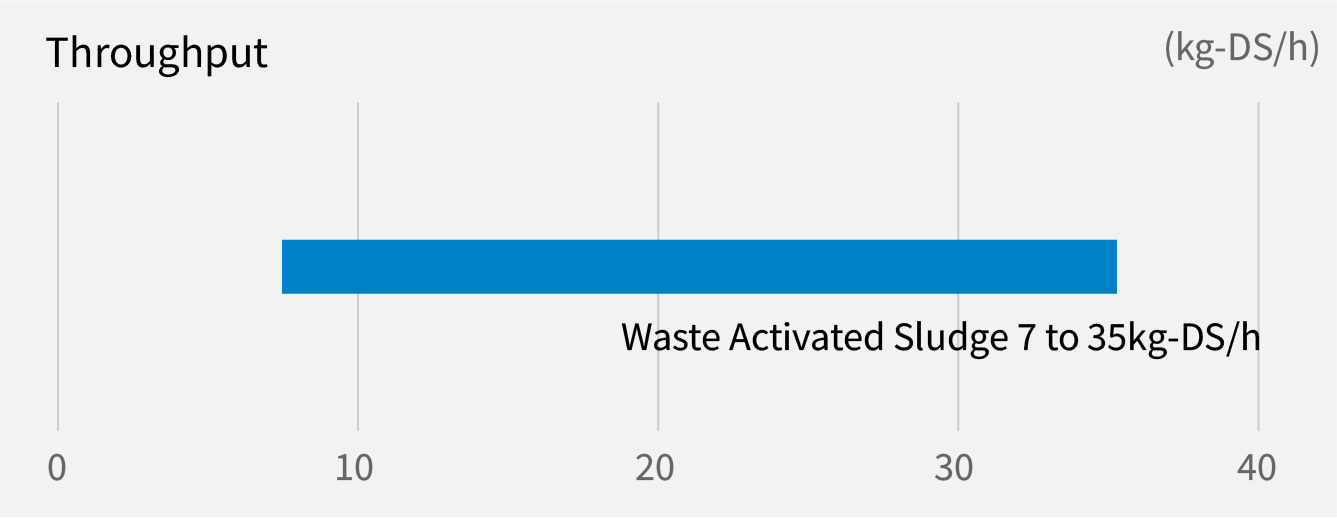
Expandable Throughput
The throughput of VOLUTE™ can be easily expanded with its Cylinder Unit. We are ready to meet your expectations, “We want to be prepared for the increase of sludge in the future, but without too much increase in the initial cost…”
-300x150.png)
Low Noise/Low Vibration
As our product does not have a high-speed spinning unit, there is no need for noise or vibration
concerns, as such, no preventative measures need to be put in place for noise pollution.
Additionally, as there is no vibration from the machine itself, any kind of flooring modifications to accommodate vibrating machines will be unnecessary.
Compact Design
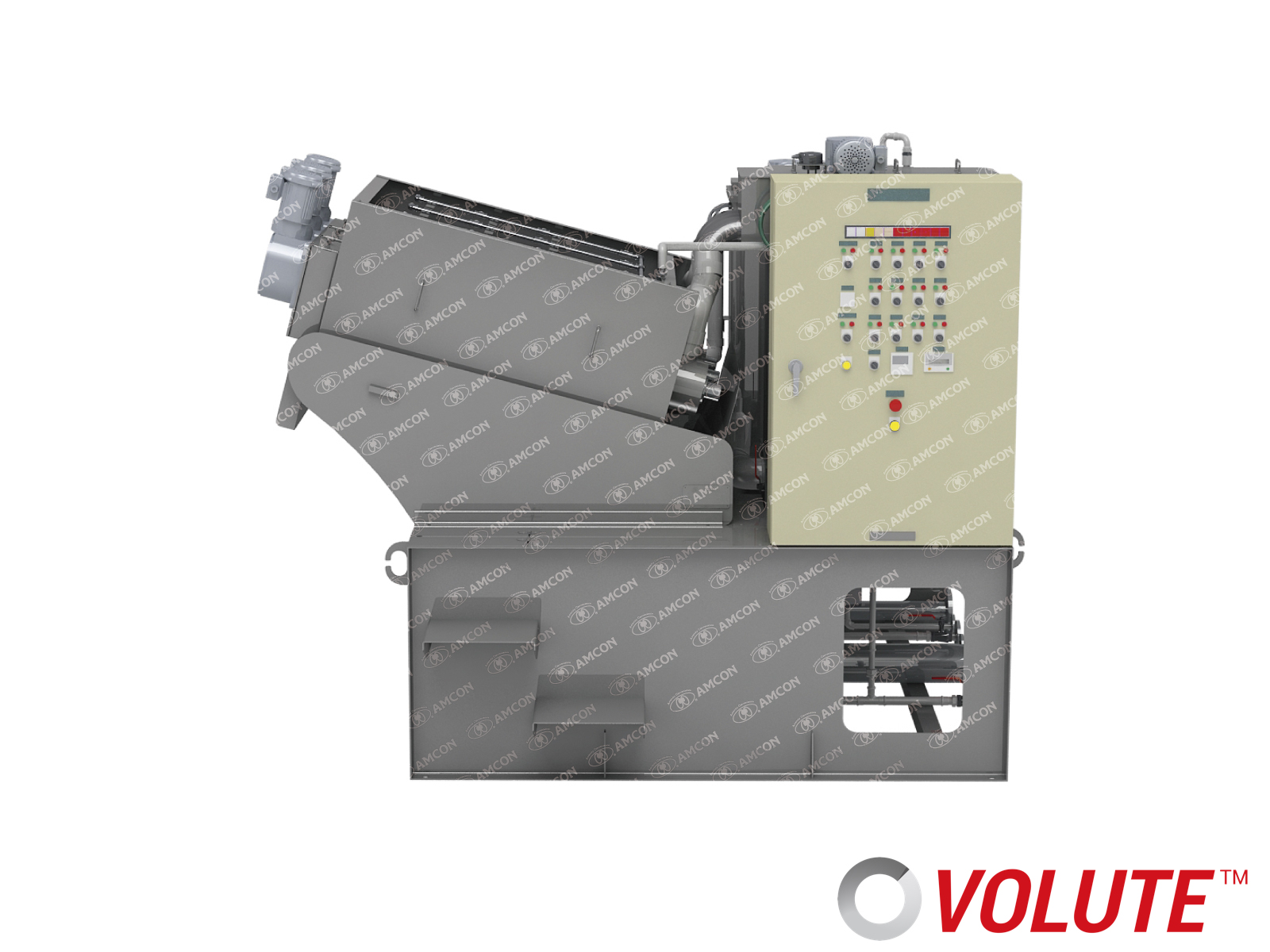
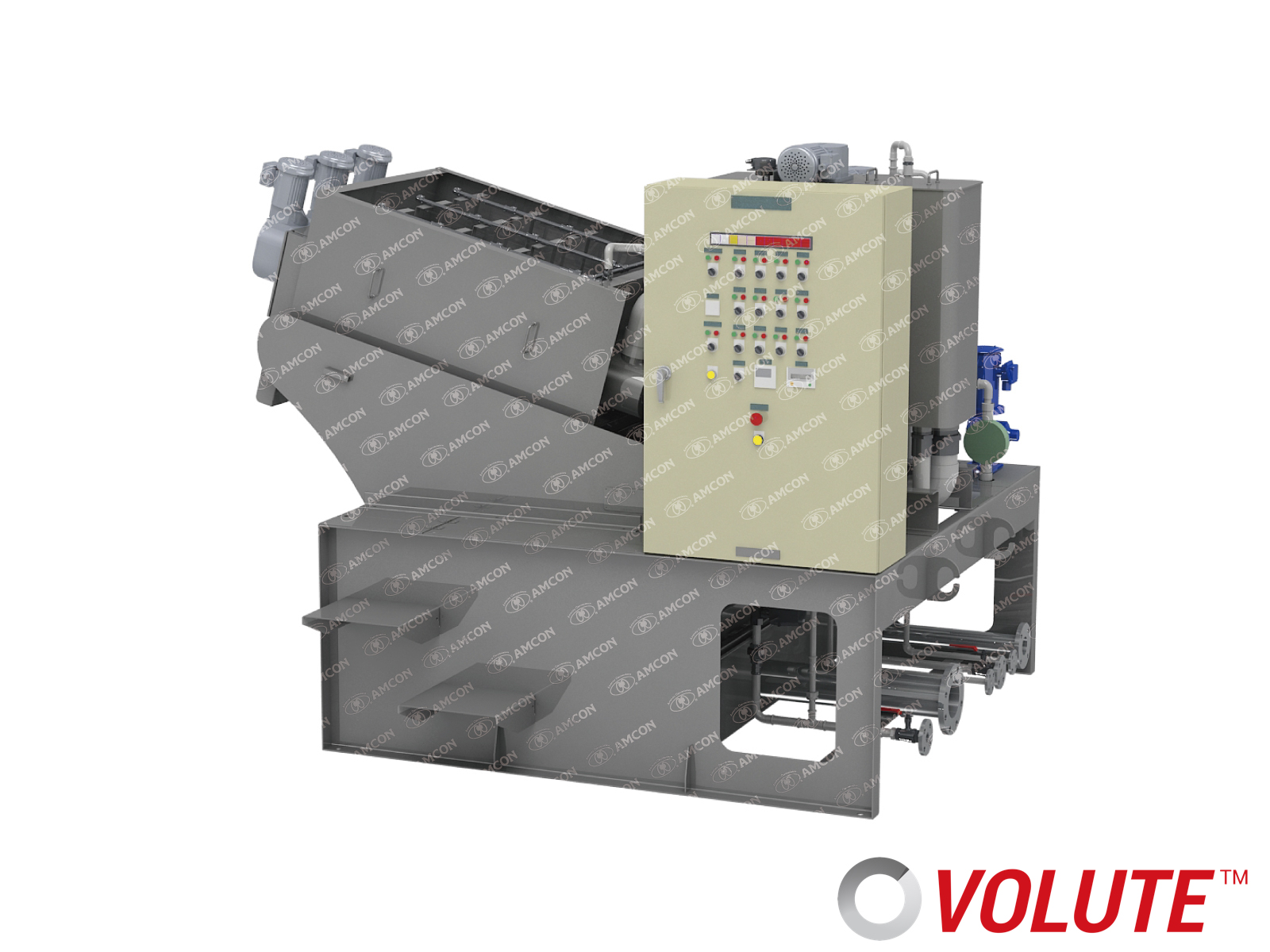
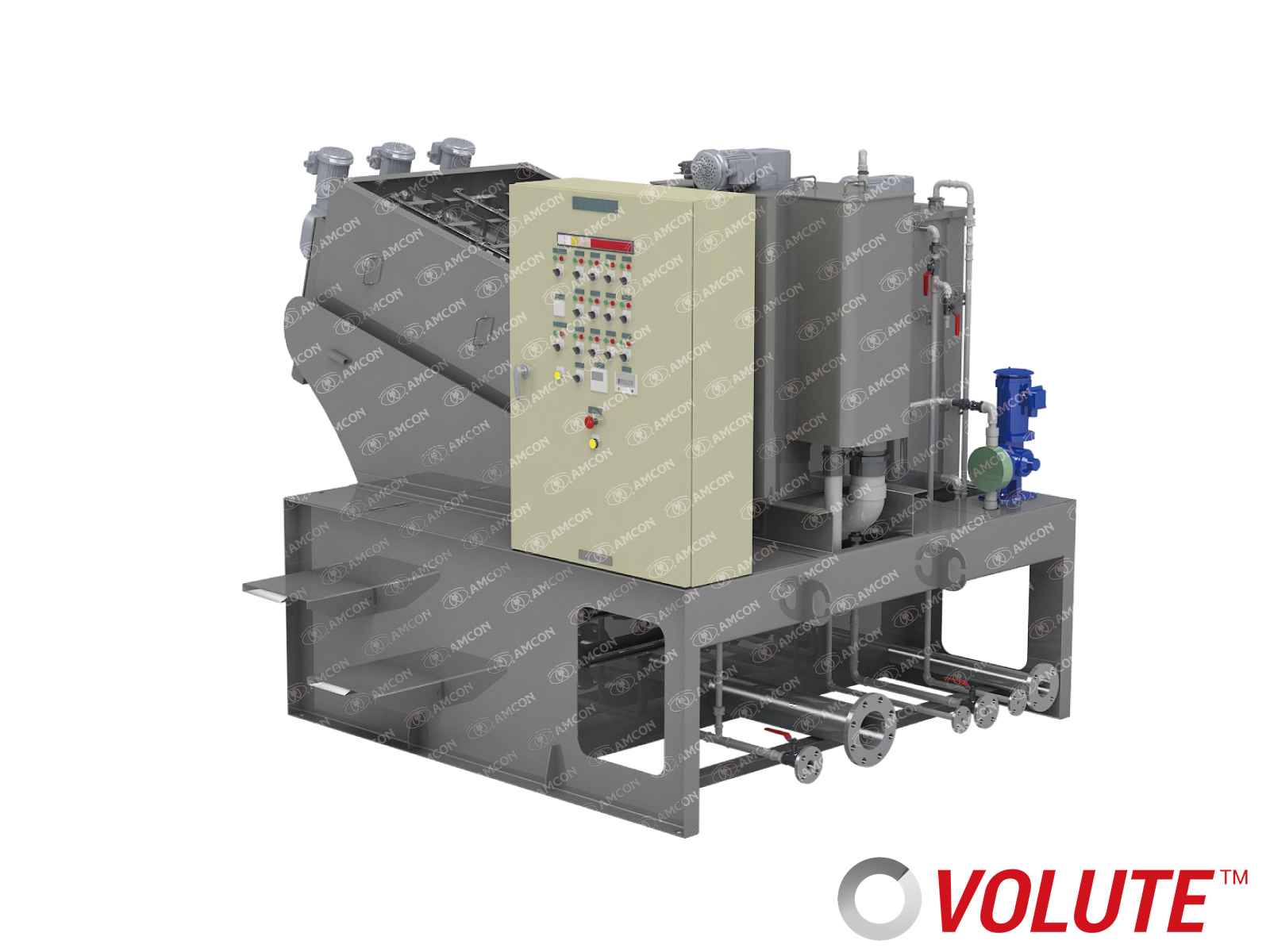
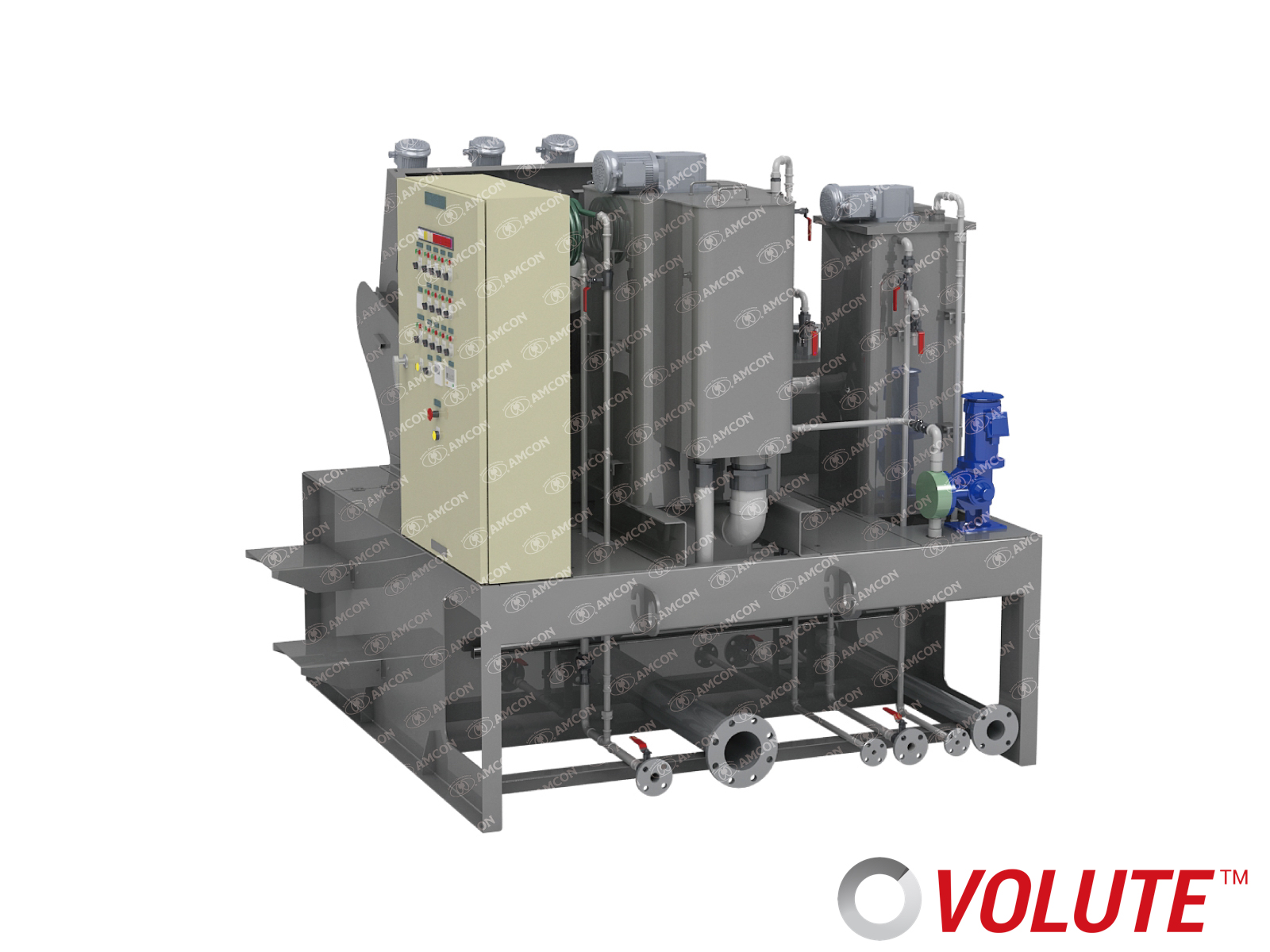
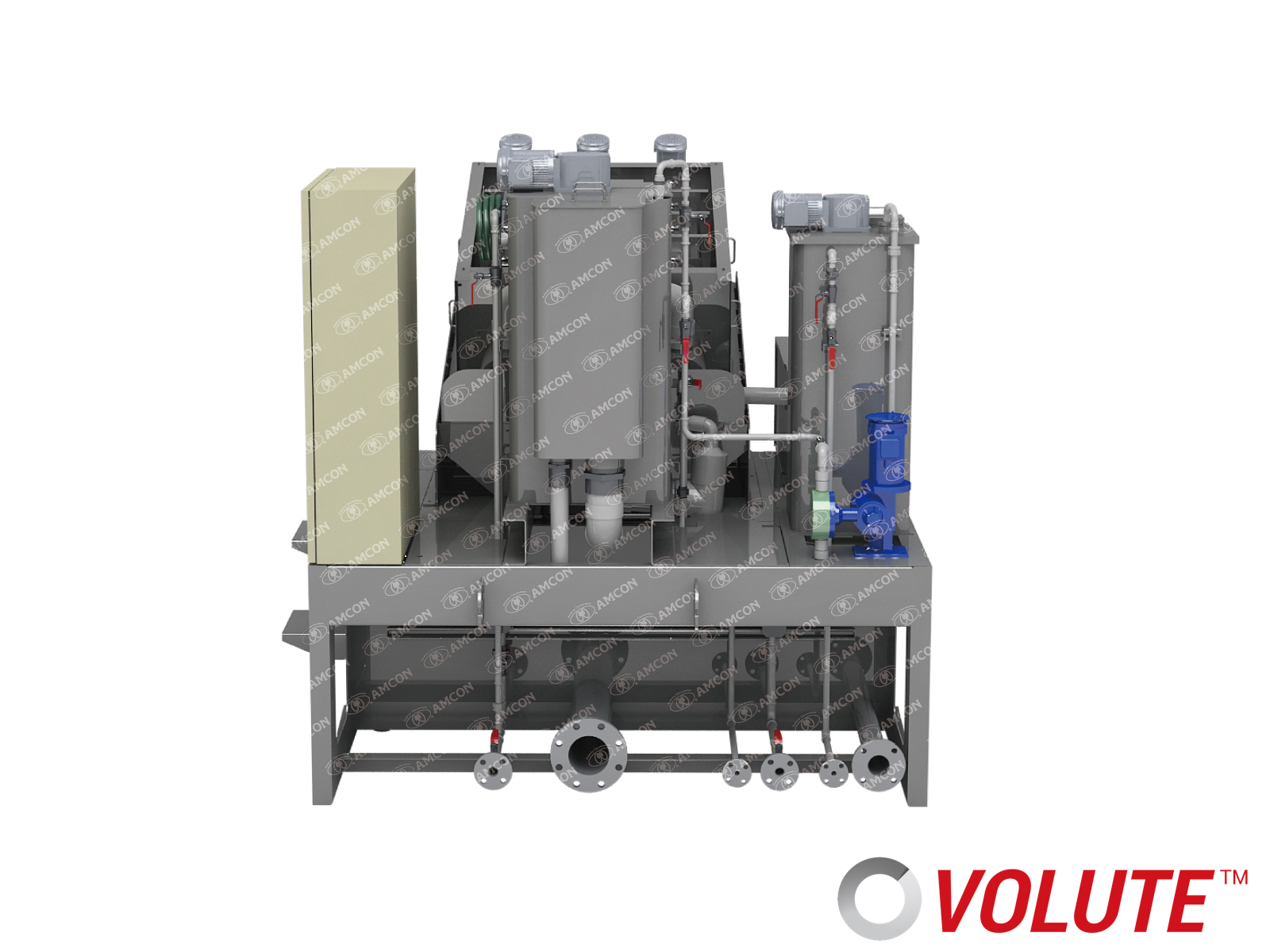
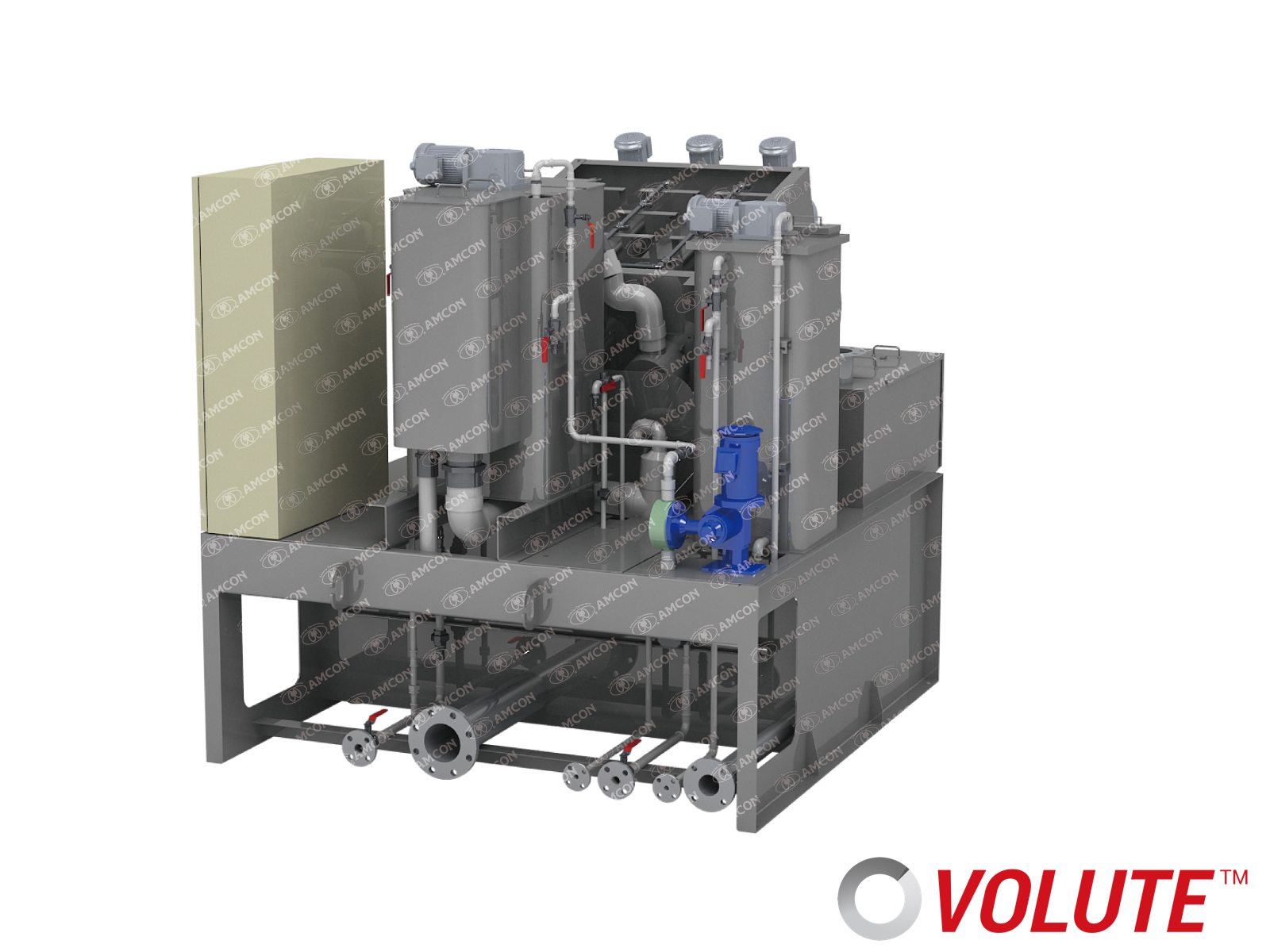
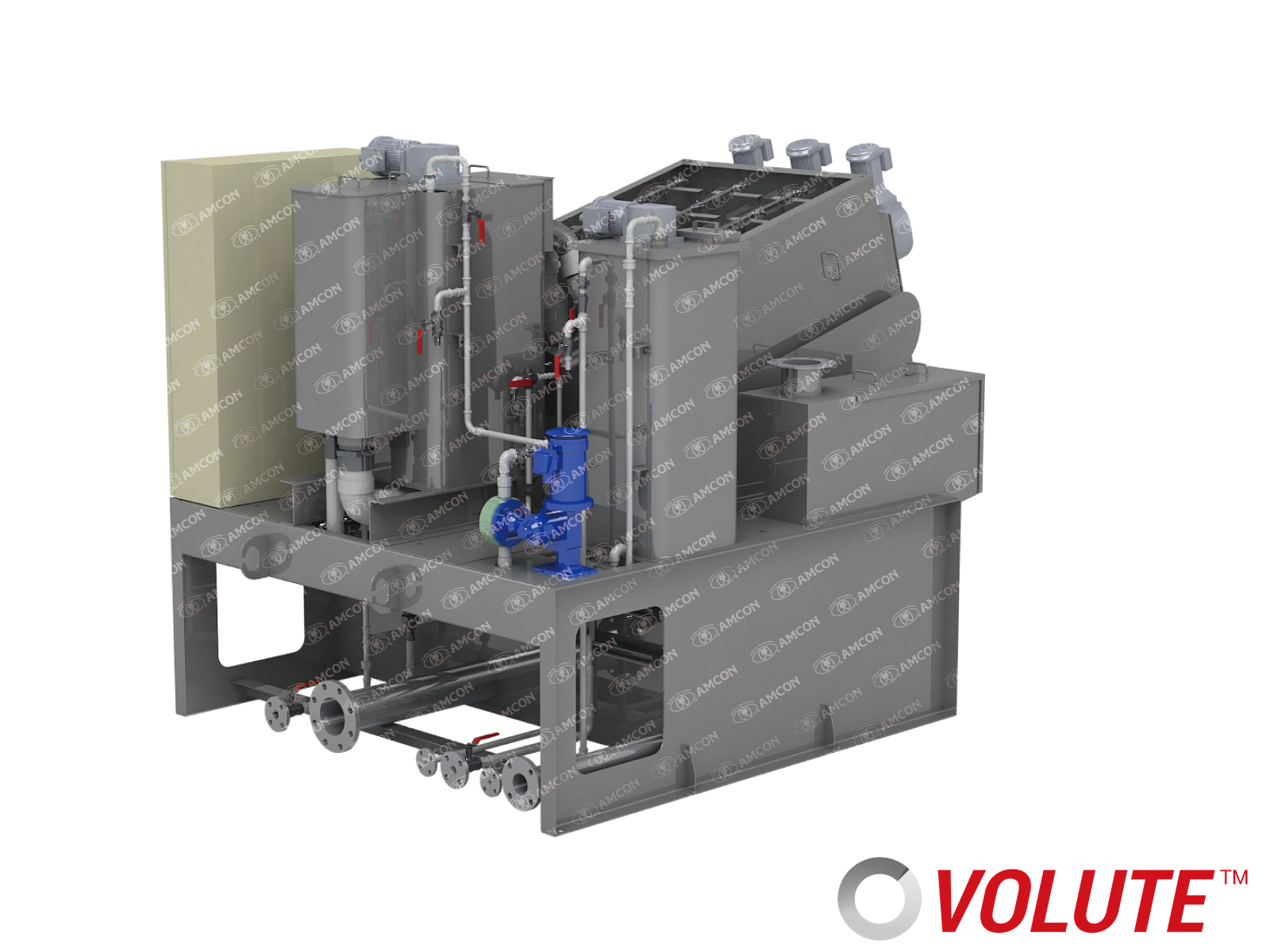
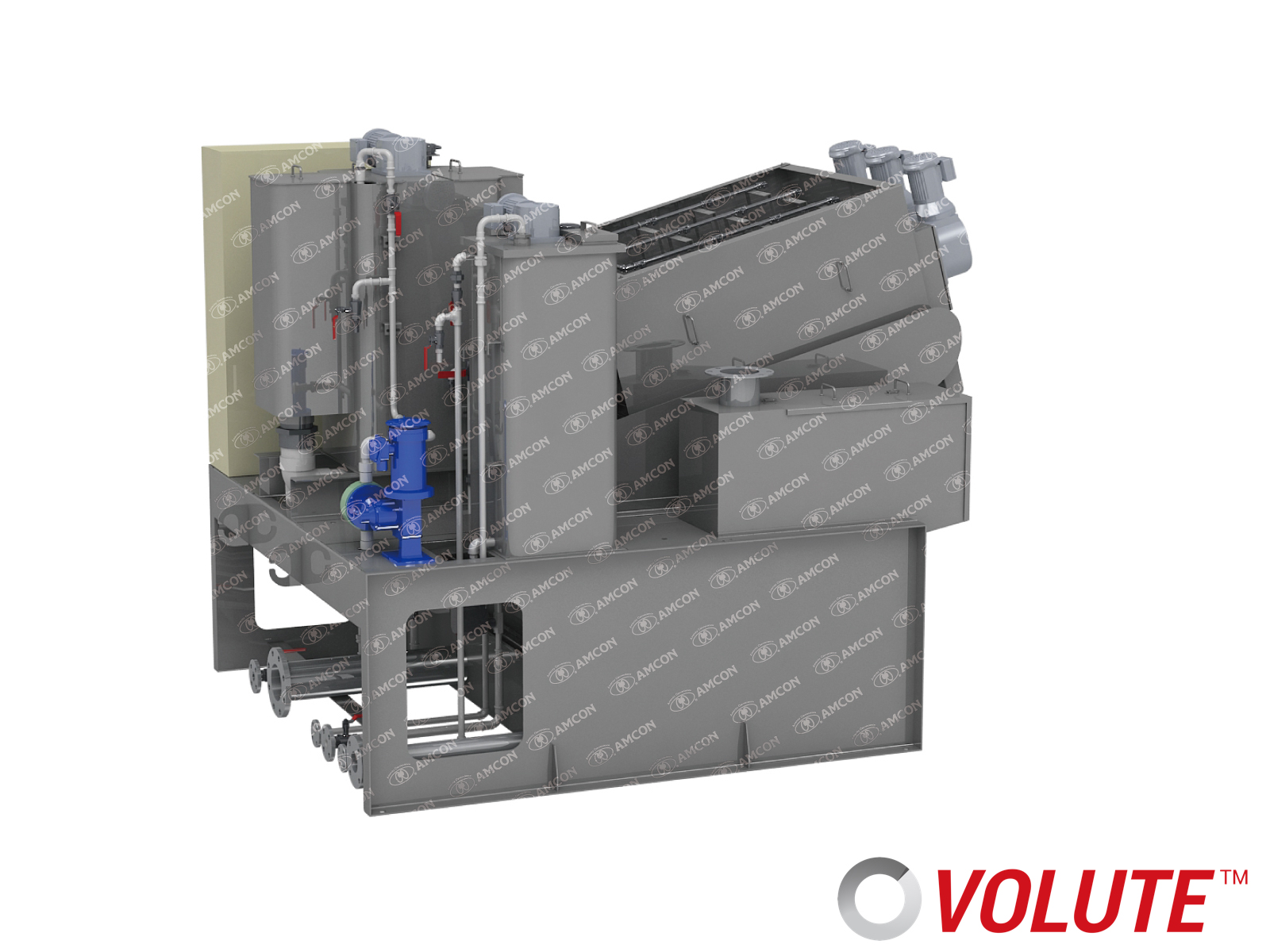
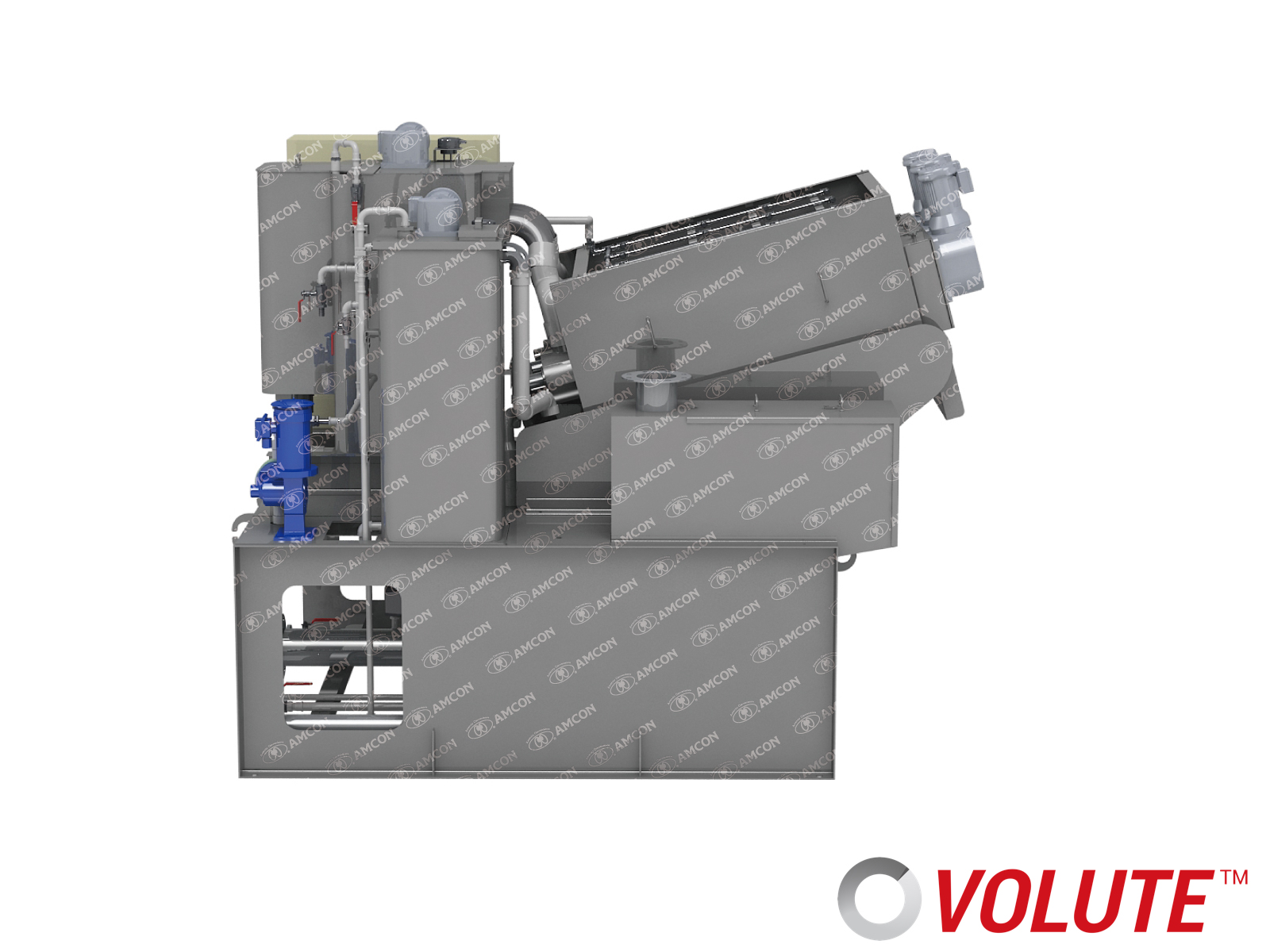
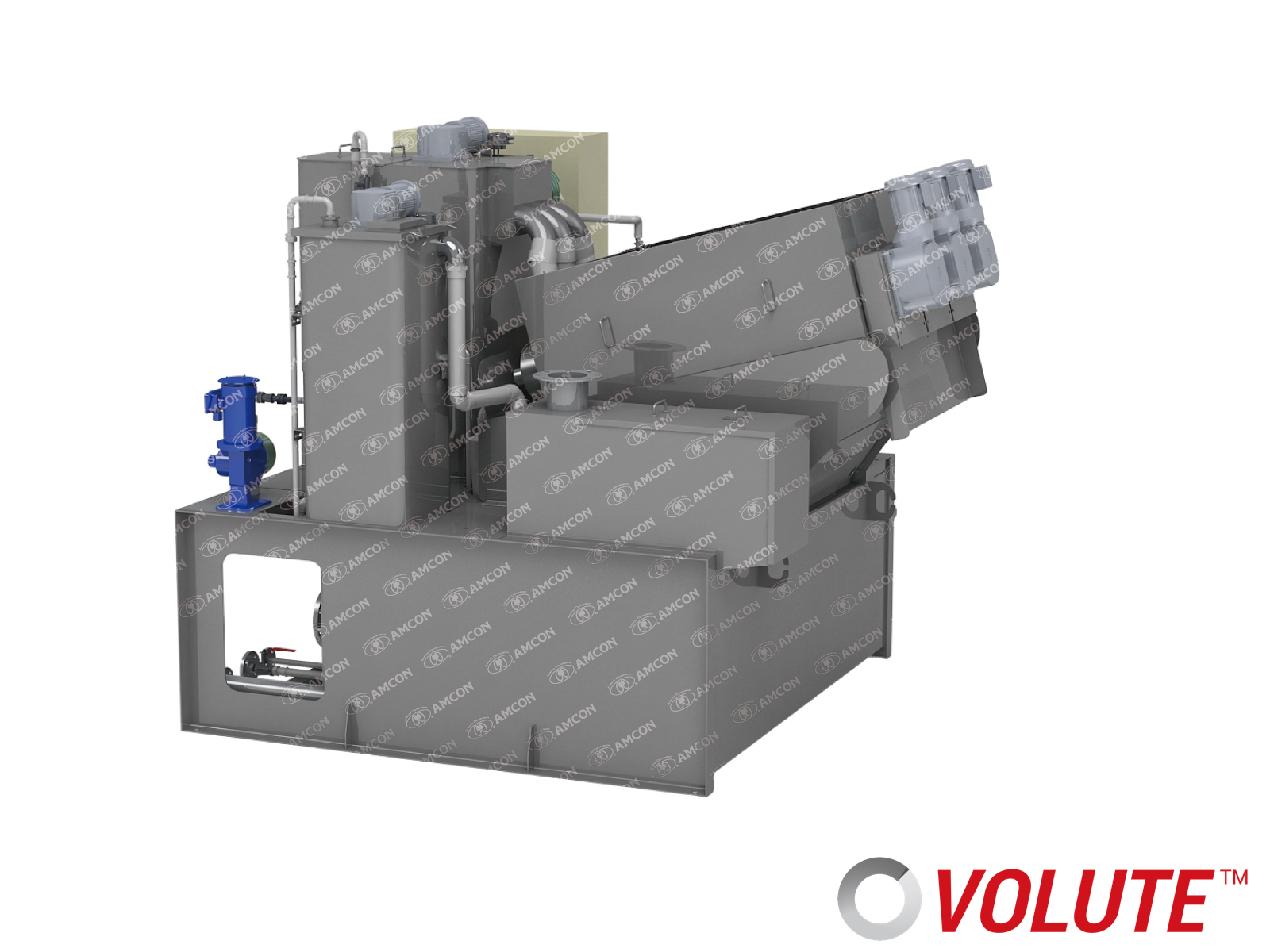
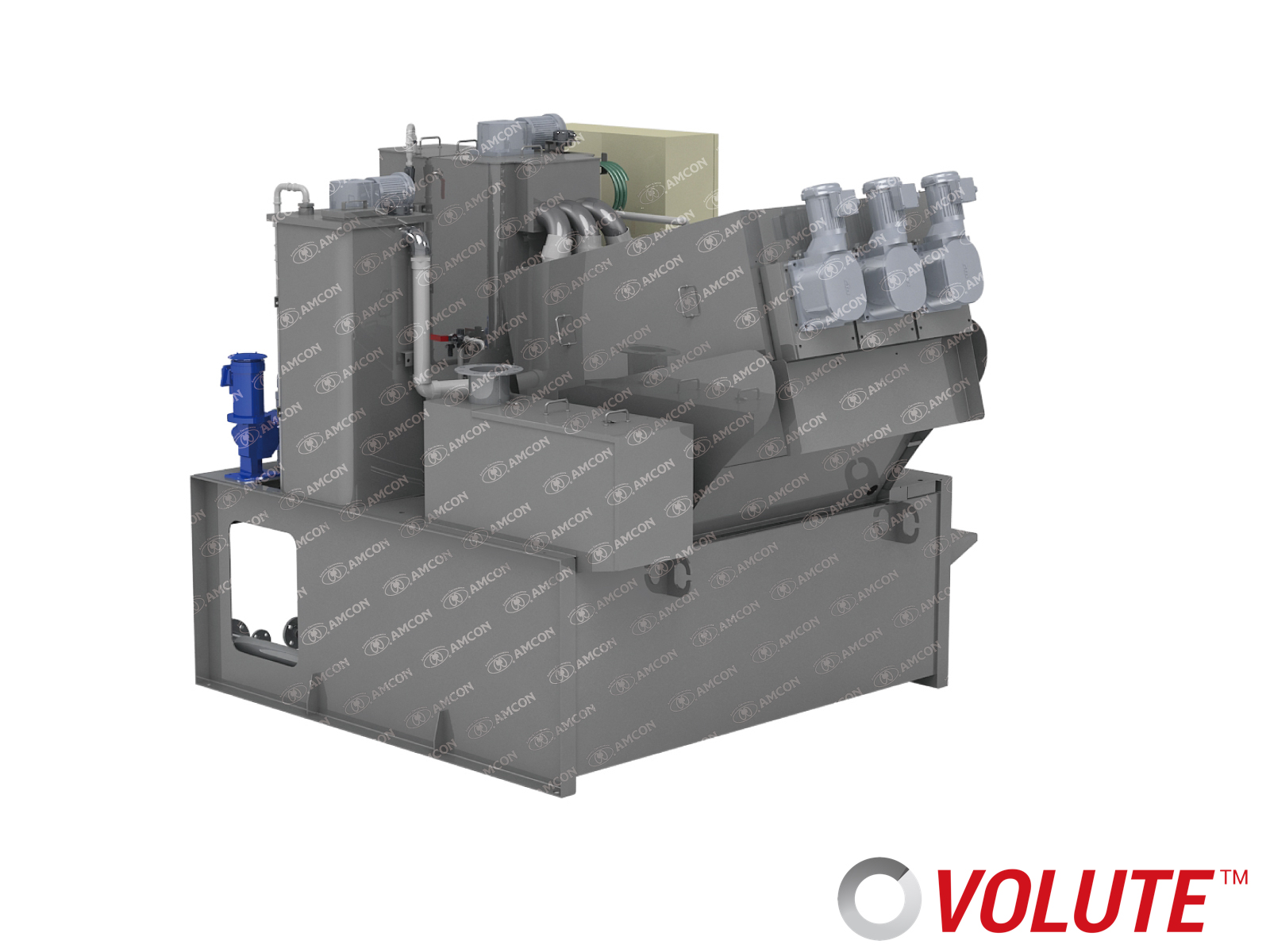
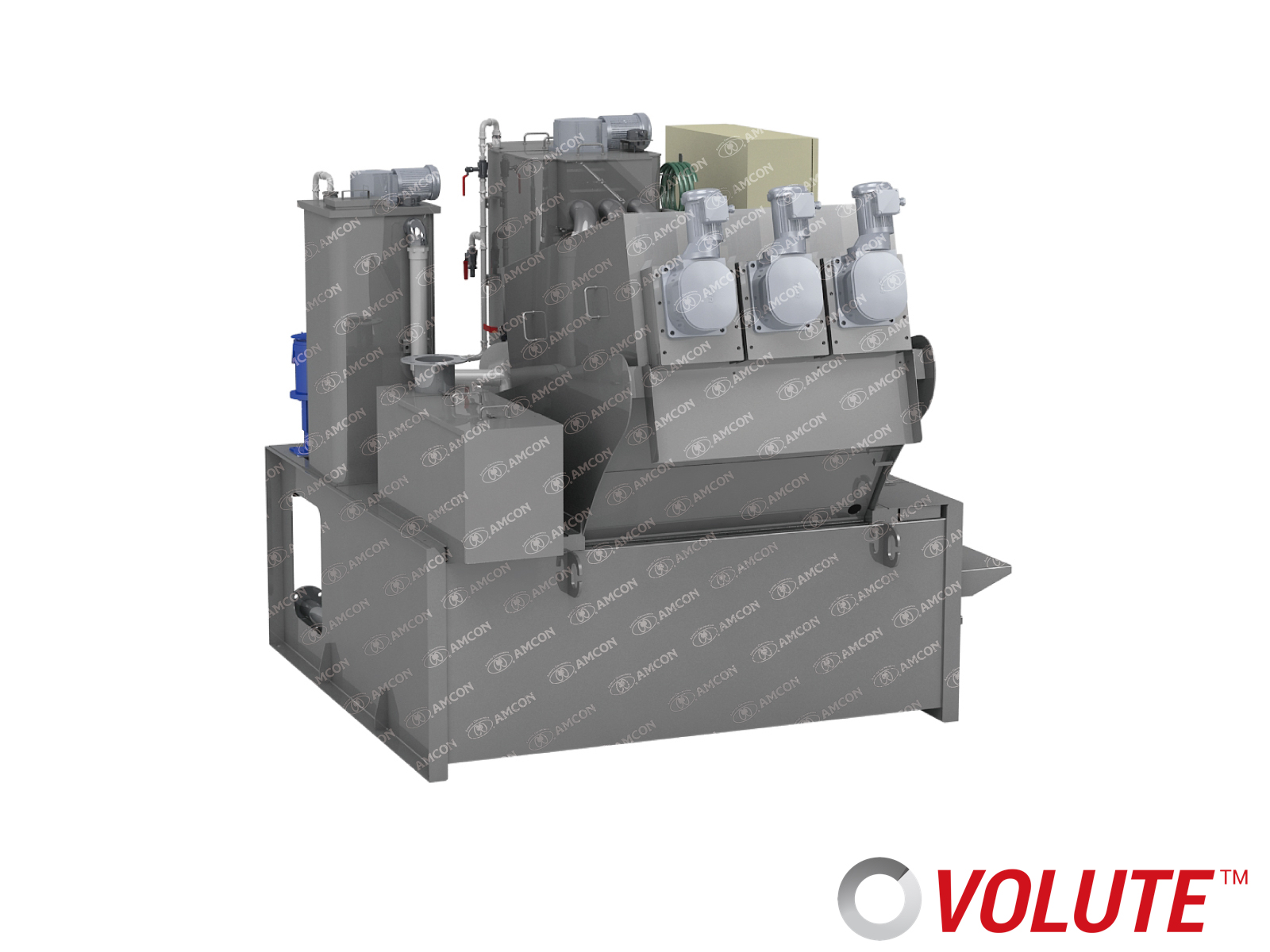
A compact, integrated design combines the filtration unit, flocculation tank, control panel, automatic screen, and other components in a single system. With a treatment capacity of 35 kg-DS/h, the unit footprint is only L2.75 m × W2.34 m. Because the equipment required for sludge dewatering is consolidated into one unit, it is easy to install even in wastewater treatment plants with limited space.
There is no need to invest in building expansion simply to secure installation space, making it well suited for replacing existing dewatering presses.
How the Clog-Free Mechanism Works
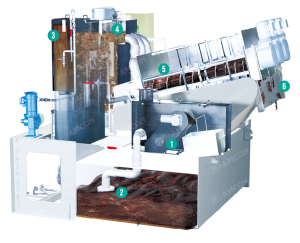
Process Flow
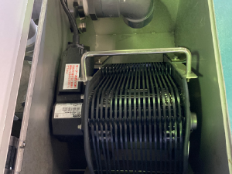
Automatic Screen
The screen removes the impurities such as hair, plastic, and others which are contained in the sludge.
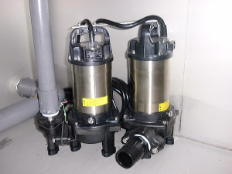
Sludge Conditioning Tank
A sludge conditioning tank temporarily stores sludge before it is dewatered. The model with a sludge conditioning tank realizes a high solid capture rate higher than 95%. When required, the conditioning tank can be used as a reactor tank for coagulant.
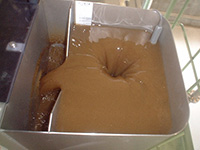
Flow Control Tank
Sludge feed is regulated with the overflow pipe, returning excess volume to the sludge storage tank.
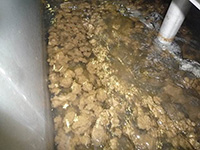
Flocculation Tank
Polymer and sludge are stirred and mixed, forming flocs suitable for VOLUTE™.
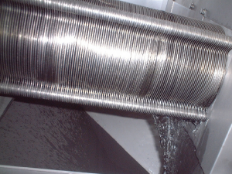
Cylinder Unit
Sludge is further thickened in the thickening zone of the cylinder, and then the inner pressure increased at the dewatering zone helps sludge being dewatered well.
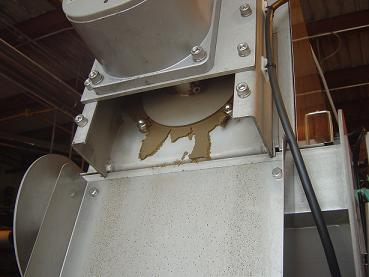
Discharge Outlet for Dewatered Cake
Further pressure is applied from the outlet side with the End Plate, discharging dewatered cake with 17% dry solids content or better.

Feel free to contact us. After collecting information about your treatment process, sludge volume, operating hours, and other conditions, we will select the most suitable model for your sludge and your concerns. During sample test, we will simulate the amount of chemicals to be dosed, the estimated water content of the dewatered cake, etc. Upon request, a pilot test can be performed at your wastewater treatment plant (for a fee). After determining the specifications and ancillary equipment, we will start producing the equipment. Our sales representative or service engineer will perform operational adjustments at your wastewater treatment plant and you will check how to operate the system before we hand over the equipment.
You may wonder, “Can the machine dewatering the sludge as desired?” or “ Is it difficult to operate the machine?”
In addition to eliminating concerns before purchase, you can also use our products as a replacement machine during the service period of an existing dewatering machine or during the construction period of a wastewater treatment facility.